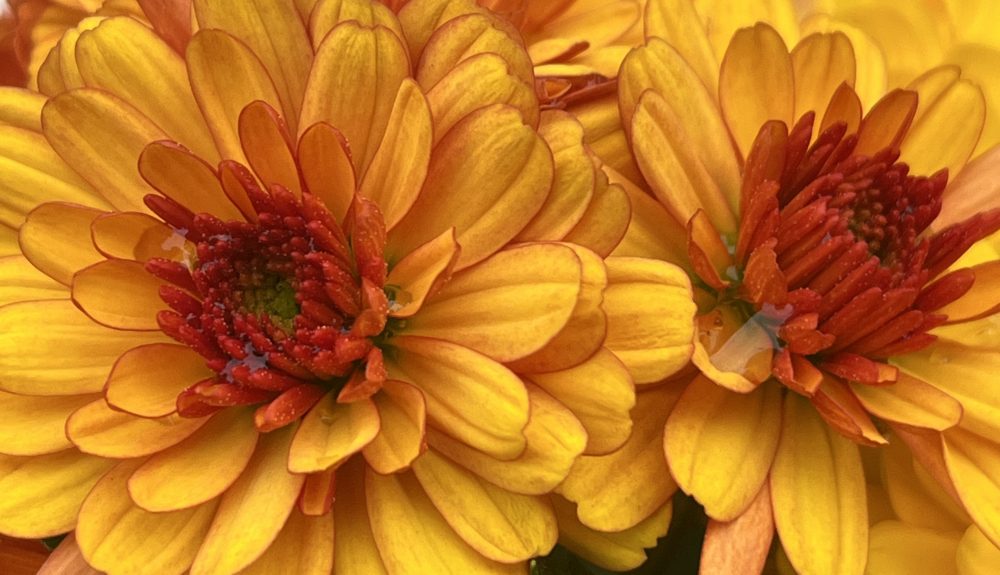
…away last week and working like crazy this week to get the house ready for my big 70 birthday
I wanted to post something a little different for Thursday Trios this week but I’m physically exhausted. This is the best I could come up with. Hopefully you’re having more luck finding trios this week. I need your inspiration. Please share.
My favourite trio in London enjoying a day at the beachA trio of holesA trio of milkweed pods
If you’d like me to comment on your trios please copy the link from this post and copy it into your own post. I’ll get a pingback and after the weekend, if not sooner, I’ll get back to you.
Wall of mini paintings, Paris, FranceMini carrousel in Tours, FranceMini Tourists looking at the Miniature replicas of architecture in Tours, FranceMini Burgers of Foie Gras, Tours, FranceMini Museum at Curve Gardens, London, UKMini IrisMini ladybugMini pine cones
Art from the Museum of Contemporary Art in Tours, FranceBust of King Francois 1st at the Chateau Amboise, in FranceArt by Franciszka Themerson at the Barbican Gallery in London, UKArt by Janet Potter at WAAC
I’m a full week late with this one but when I went back to this challenge I realized that I had some great ‘arches’ from our vacation in France and London, England.
Cathedral in Paris, FranceArched entrance to the Chateau Royal in Amboise, FranceArched exits at the Amboise Chateau Royal, FranceArches in one of the main exhibition rooms in the V&A, LondonArched or barrel ceiling over the staircase in the V&A, LondonFrom the cafeteria in the V&A, London
in department storesOn walls – trio of Stik charactersIn the parkin gardens
If you have some trios you’d like to share, just copy my link and paste it into your blog. I’ll get a ping back and will be sure to leave a comment. Have fun!
*WARNING* if you are offended by nudity in art or the antiquities you may not want to continue reading this post. Just saying…..
On our trip to London this year we spent a couple of hours at the British Museum. We went there primarily to see the Stonehenge Exhibition but our tickets were time sensitive so we decided to pass some time in the other galleries. The first gallery, on your right as you enter the museum, houses some of the collection donated by Hans Sloane who was directly responsible for the opening of the British Museum. He donated some 71 000 pieces from his personal collection on the premise that the museum itself would remain free of charge to the British people and anyone outside of Britain who wanted to see it. Sloane is not without his dark side and in recent years it was revealed that much of his collection and wealth were derived from slavery. In 2020 his bust was removed from the entrance and moved into the gallery next door and encased under glass with an explanation as to how slavery contributed to his wealth.
Clearly missing the rest of his body
In this same gallery are many statues from ancient Greece and Rome. It is here that I found the ‘missing’ component of this post. It is not unusual to see parts of these statues with missing limbs and even heads but it seemed that every single nude male had his penis removed, not broken off but actually sliced off. I found this odd and I wondered why so I did some research.
Many scholars believe that the missing appendages fell off during an earthquake, which was quite a common occurrence in Greece and Rome but others believe that converts to Christianity back in the 5th century were offended by the exposed genitalia and the parts were consequently emasculated or were provided with a loincloth (cemented in place). In later years some believe that missionaries, dealers and some collectors had a hand in removing parts that they deemed offensive. This scant disrespect for the integrity of the items may explain the condition of the statues and sculptures that I witnessed on the day I visited.
In 1857 Queen Victoria was gifted a full scale cast of Michelangelo’s David . She was apparently so taken aback by the frontal nudity that the museum commissioned a fig leaf to conceal the offending genitalia for subsequent visits of Her Royal Majesty. On my our first trip to the V&A our son pointed out the gold plated fig leaf and explained the significance to us. We found it quite amusing.
If you want more information about how and why this happened you may find this paper by Jeremy MacClancy interesting.