The mural, “trompe l’oeil”, is on the back of the Gooderham Building or more commonly known as the Flatiron Building. It appears to be a canvas screwed onto the façade with the edges of the canvas fluttering in the wind.
The Gooderham Building, is located on the wedge shaped corner of Wellington East, Front, and Scott Streets and was built in 1891. It was owned by George Gooderham who owned numerous properties throughout the city, including the Gooderham Distillery. He was one of the richest men in Canada and yet was relatively unknown.
When our daughter invited us to join her and her wife at the Cheltenham Badlands, I thought we were driving there to look, take a few photos and then drive over to Spirit Tree for lunch. When we arrived at the parking lot we discovered that they were hiking on the Bruce Trail and were about 30 minutes away from us. They suggested that we get on the trail and walk towards them. Luckily I had on walking shoes but my pants were way too warm. Nonetheless we made the short hike, met them and then hiked back toward the Badlands.
After a short walk back to the car we drove to the Spirit Tree Estate Cidery. We found a shady area under a tent and ordered cider and wood oven baked pizza.
*WARNING* if you are offended by nudity in art or the antiquities you may not want to continue reading this post. Just saying…..
On our trip to London this year we spent a couple of hours at the British Museum. We went there primarily to see the Stonehenge Exhibition but our tickets were time sensitive so we decided to pass some time in the other galleries. The first gallery, on your right as you enter the museum, houses some of the collection donated by Hans Sloane who was directly responsible for the opening of the British Museum. He donated some 71 000 pieces from his personal collection on the premise that the museum itself would remain free of charge to the British people and anyone outside of Britain who wanted to see it. Sloane is not without his dark side and in recent years it was revealed that much of his collection and wealth were derived from slavery. In 2020 his bust was removed from the entrance and moved into the gallery next door and encased under glass with an explanation as to how slavery contributed to his wealth.
Clearly missing the rest of his body
In this same gallery are many statues from ancient Greece and Rome. It is here that I found the ‘missing’ component of this post. It is not unusual to see parts of these statues with missing limbs and even heads but it seemed that every single nude male had his penis removed, not broken off but actually sliced off. I found this odd and I wondered why so I did some research.
Many scholars believe that the missing appendages fell off during an earthquake, which was quite a common occurrence in Greece and Rome but others believe that converts to Christianity back in the 5th century were offended by the exposed genitalia and the parts were consequently emasculated or were provided with a loincloth (cemented in place). In later years some believe that missionaries, dealers and some collectors had a hand in removing parts that they deemed offensive. This scant disrespect for the integrity of the items may explain the condition of the statues and sculptures that I witnessed on the day I visited.
In 1857 Queen Victoria was gifted a full scale cast of Michelangelo’s David . She was apparently so taken aback by the frontal nudity that the museum commissioned a fig leaf to conceal the offending genitalia for subsequent visits of Her Royal Majesty. On my our first trip to the V&A our son pointed out the gold plated fig leaf and explained the significance to us. We found it quite amusing.
If you want more information about how and why this happened you may find this paper by Jeremy MacClancy interesting.
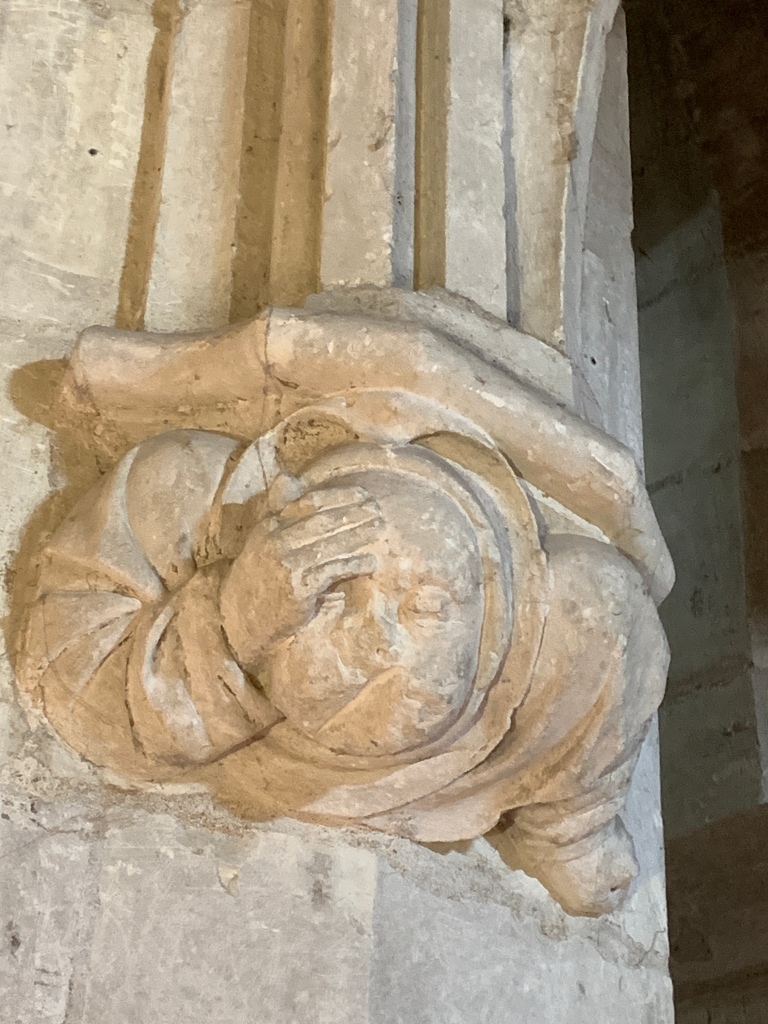
…..they’re everywhere…..on and in churches and castles
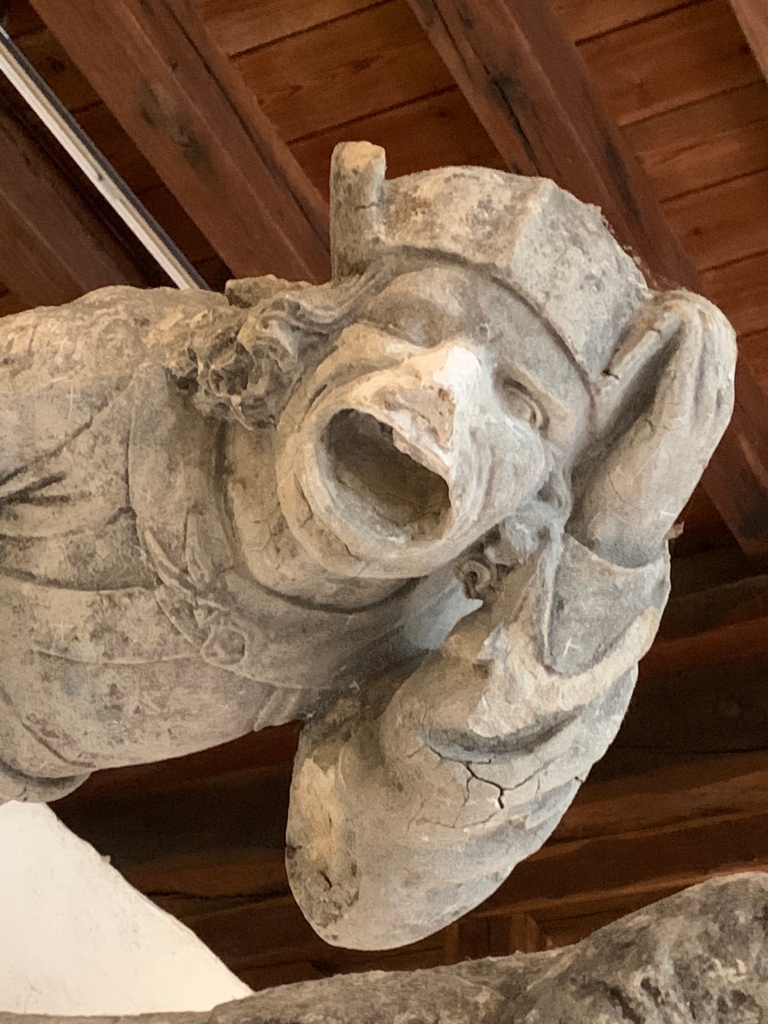
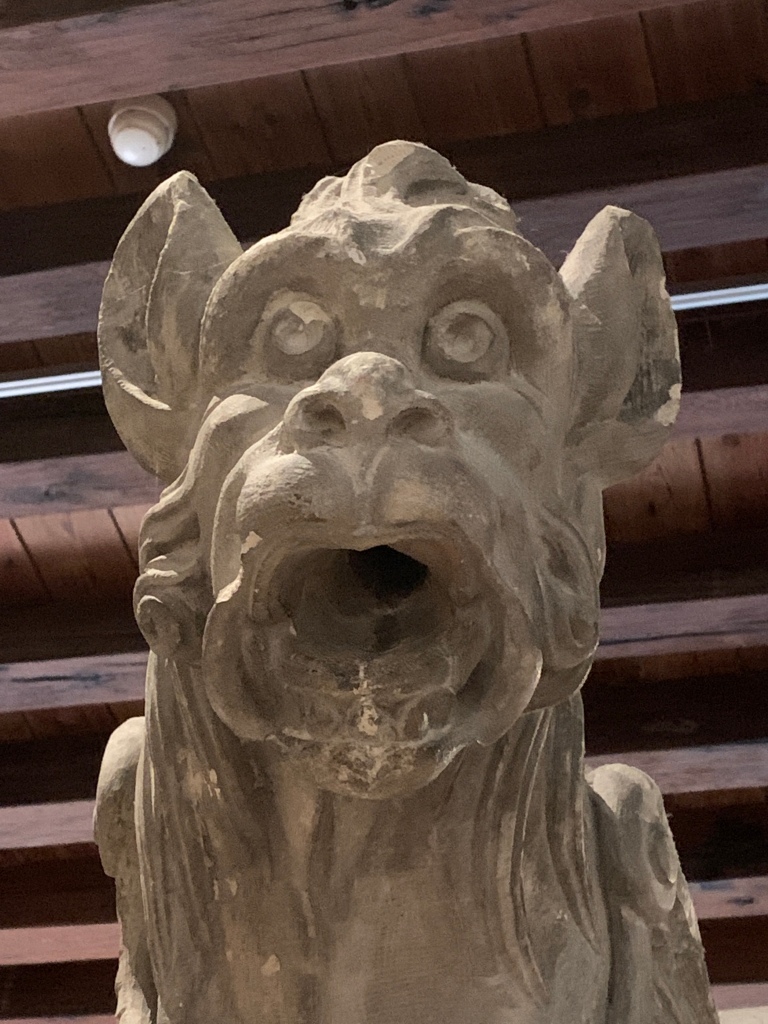
Did you know that gargoyles are more than decorative motifs on the sides of buildings? Most serve a very practical function.
Gargoyles are designed to allow rainwater to run off from the roof, usually through the mouth of the creature, man or animal that it is fashioned after. They were the precursor to gutters and rain spouts.
Historians also say that gargoyles were designed to protect a location and the people therein from negativity and unwanted spirits.
From the Cathedral in ToursFrom the Château Royal in AmboiseFrom the Château in Blois
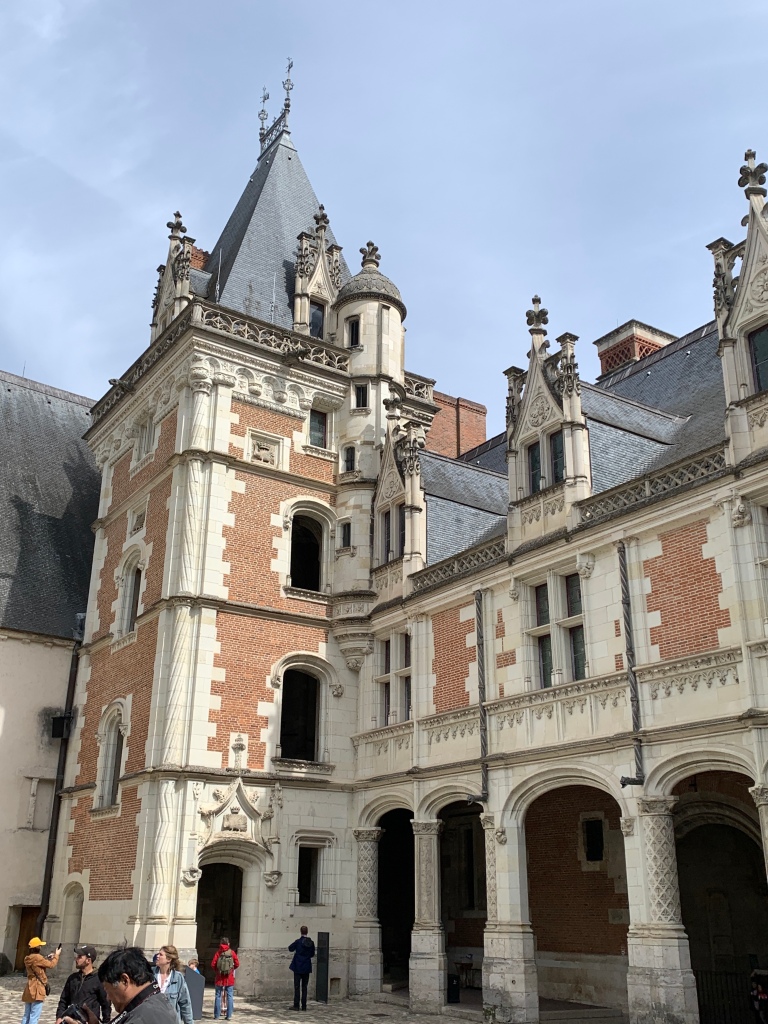
The interesting part of this castle is that it has four wings from four different eras and in four different styles, arranged around the same courtyard.
From the Outside
On the right side is the original medieval château built by the Counts of Blois beginning in the 9th century
Inside the Courtyard
This is the Louis XII wing built the Flamboyant Gothic style between 1498 and 1508The Francois 1 wing was built in 1515 to 1519 inspired by the Italian RenaissanceThe Gaston of Orléans wing was constructed between 1635 and 1638. This wing was one of the first masterpieces of Classic French architecture
Inside the Château
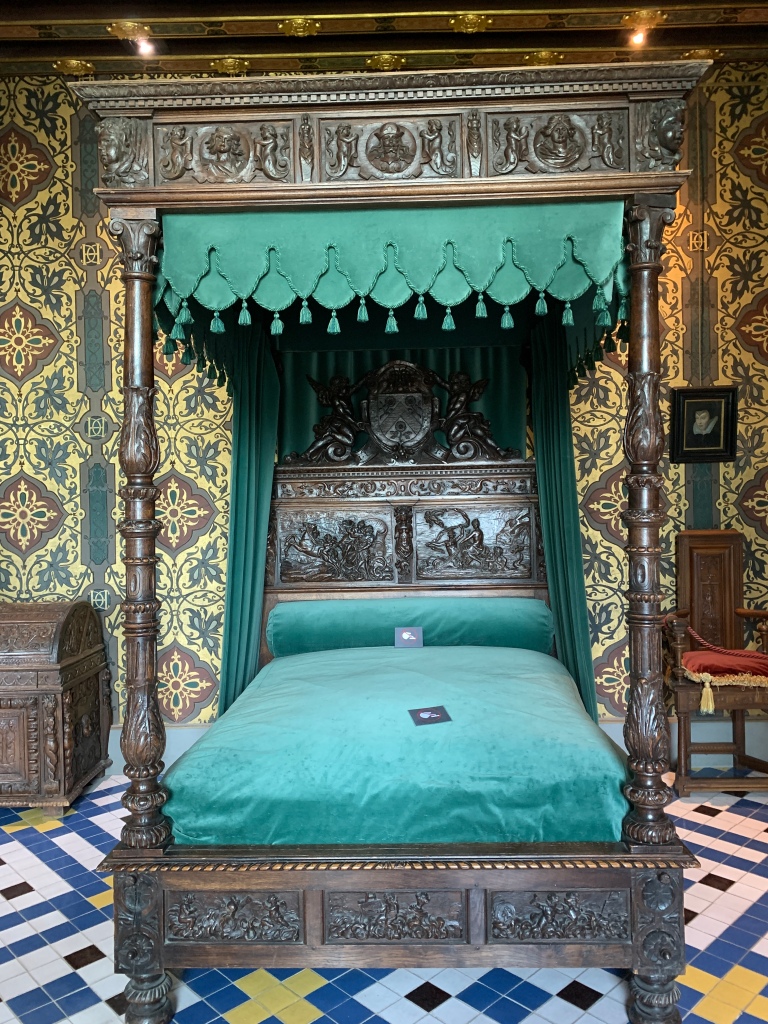
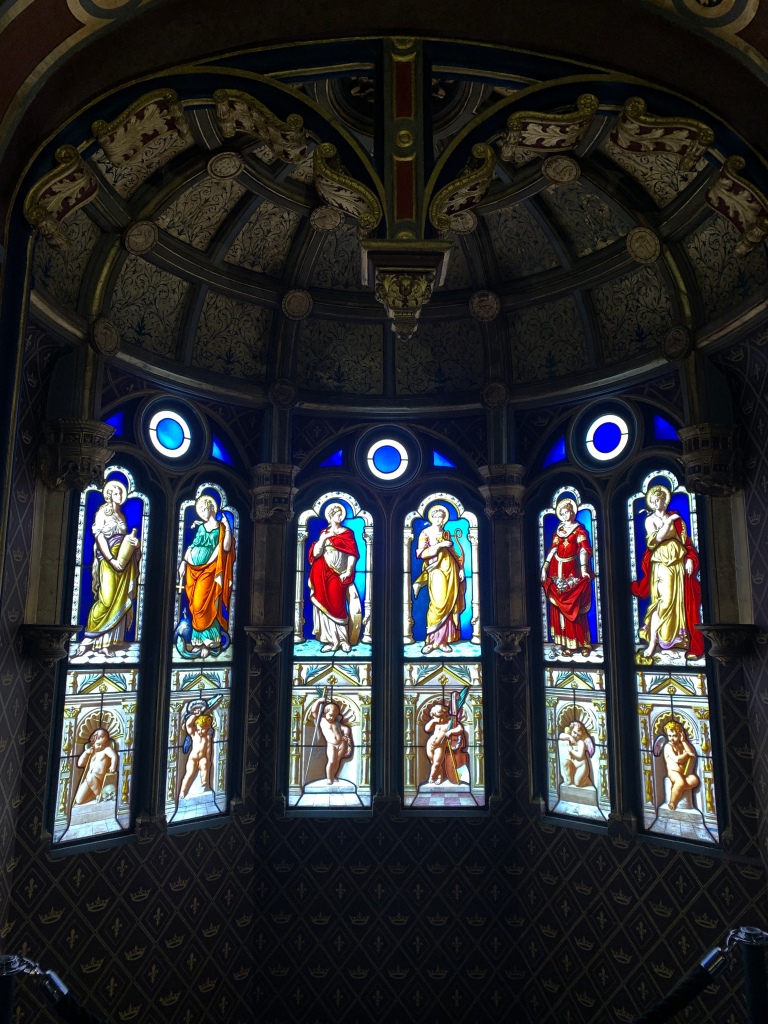
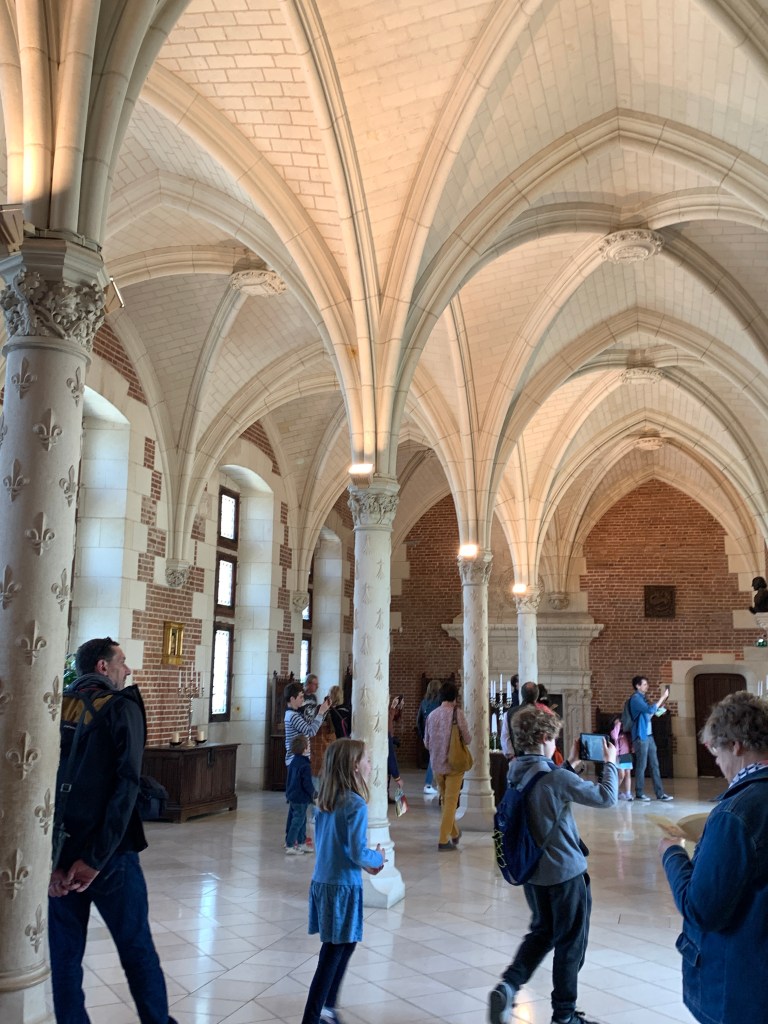
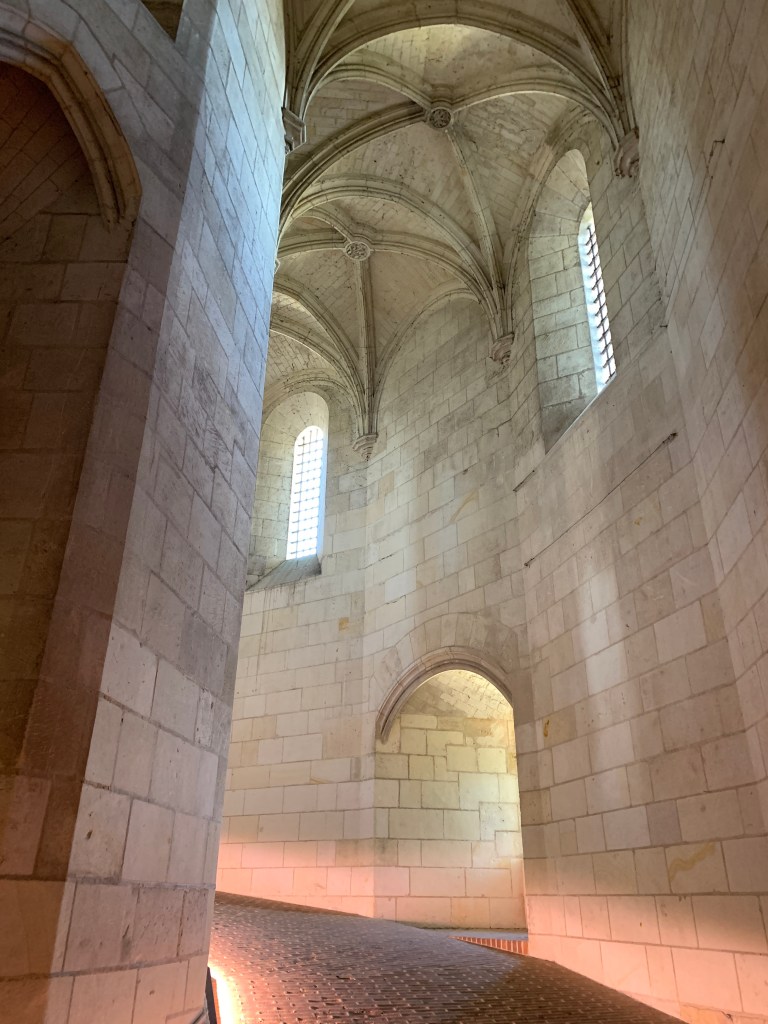
Decorations over one of the two fireplaces in the King’s roomA throne with a fleur-de-lis canopy is where audiences were ranted by the king The music roomThe Queen’s Chamber dedicated to Queen Catherine de Medici, wife of King Henri II The Oratory, a private space for prayerThe Estates General Room built in 1214 and used as a courtroomOne of many fireplaces found in almost every roomThe vestibule of Gaston of Orléans giant construction project which was brought to a sudden stop
The wing remained an empty shell covered by an impressive oval dome…..the wing now houses temporary exhibition rooms
In the next post I will share the gardens and the views from the château.
….my favourite part of the château had to be the surrounding gardens
Part 2
The gardens were created at the end of the 15th century. King Charles VIII was so impressed with the gardens in Naples that he commissioned a Neapolitan priest, Dom Pacello da Mercogliano to recreate a pleasure garden and quiet space.
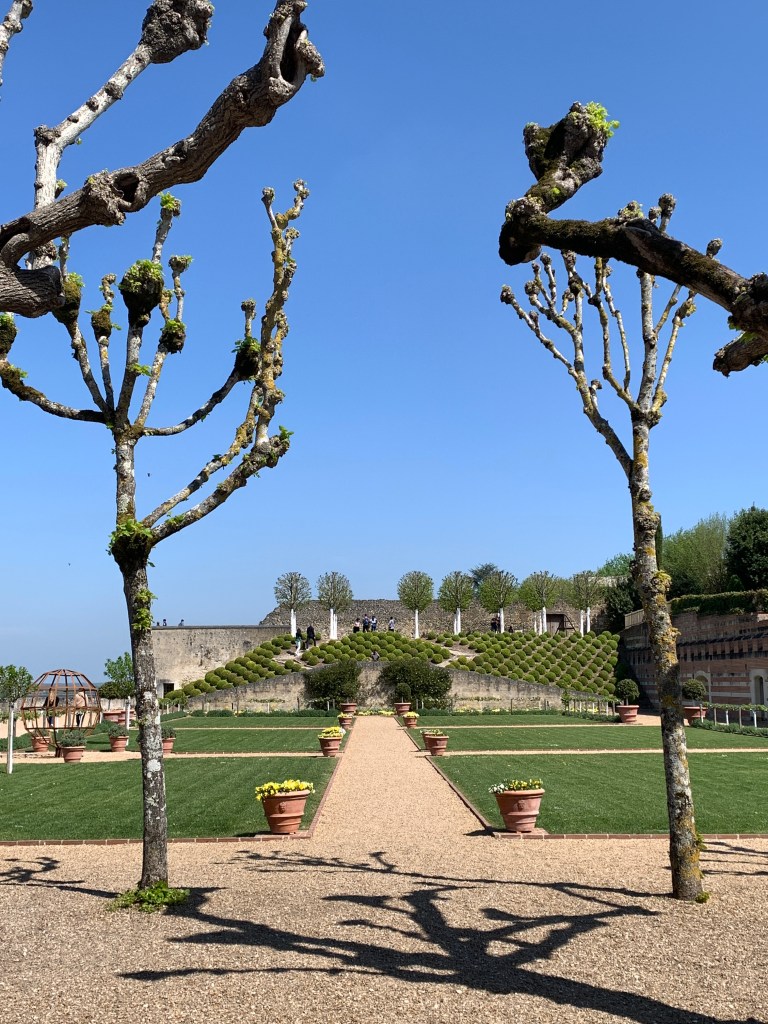
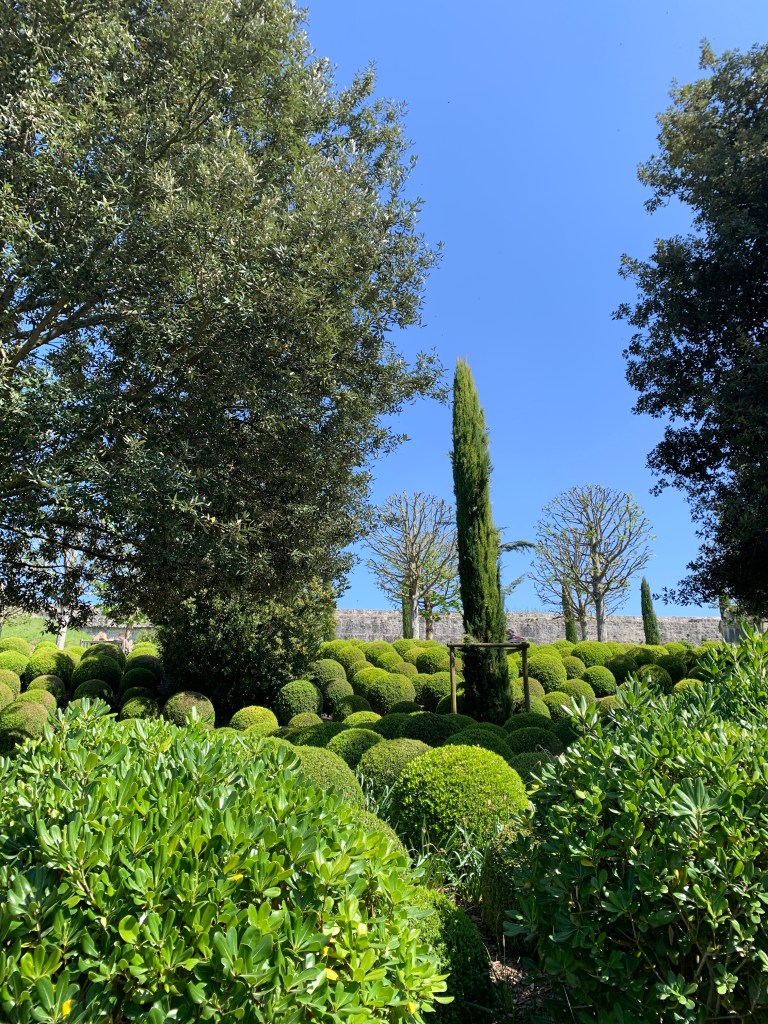
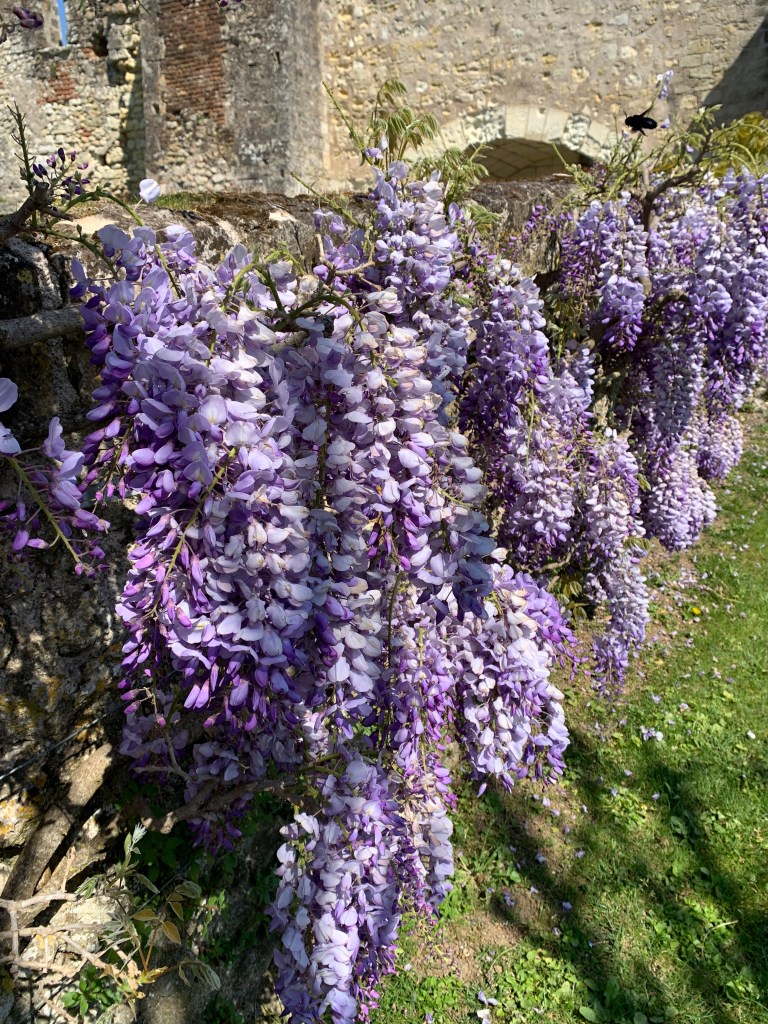
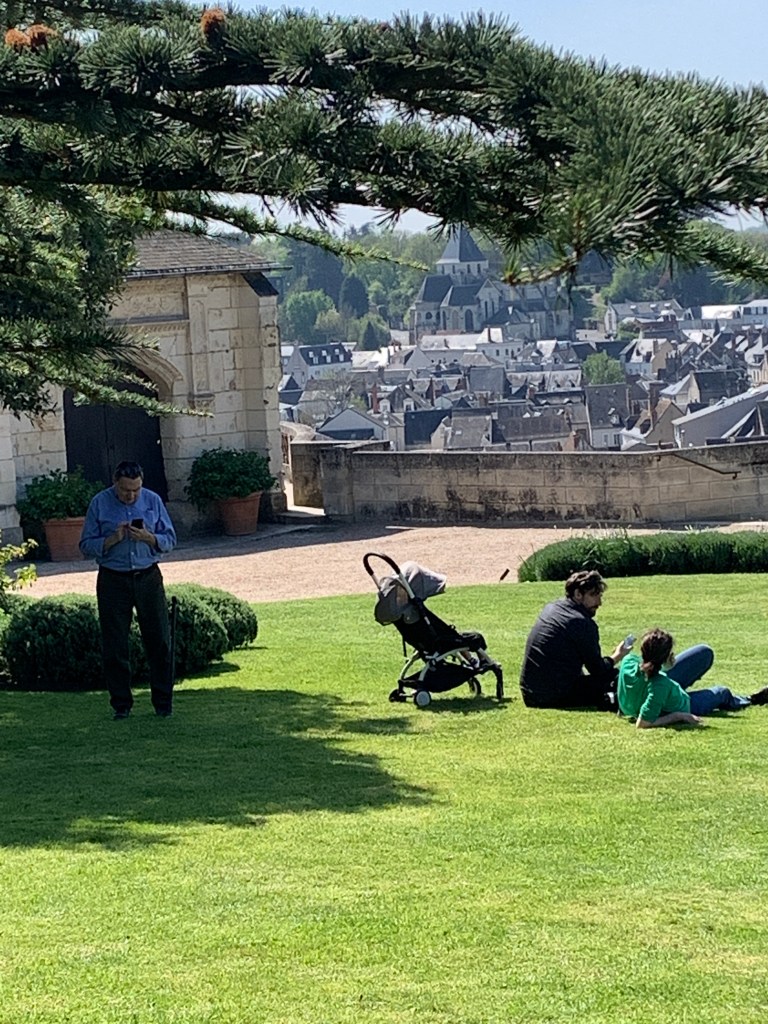
The Naples TerraceView of the terrace from the château The site of Leonardo da Vinci’s burial groundIn the past few years it has been replanted with boxwood, cypress trees, vines and grassesWisteriaThe Lebanese Cedar provides a cool, shady spot to rest
…..as of today we managed to take in two castles, the Amboise Châteaux Royal and the Château Royal de Blois
Visiting both castles required taking trains from Tours. The actual trips took about 30 to 40 minutes unless the train was delayed because there were too many bicycles on board. Yes that’s a thing apparently. The conductor refused to let the train continue until some of the bikes were removed or properly stored. Our last trip back to Tours took an hour. I’ve never seen so many people run as they left the train trying to catch their connecting train.
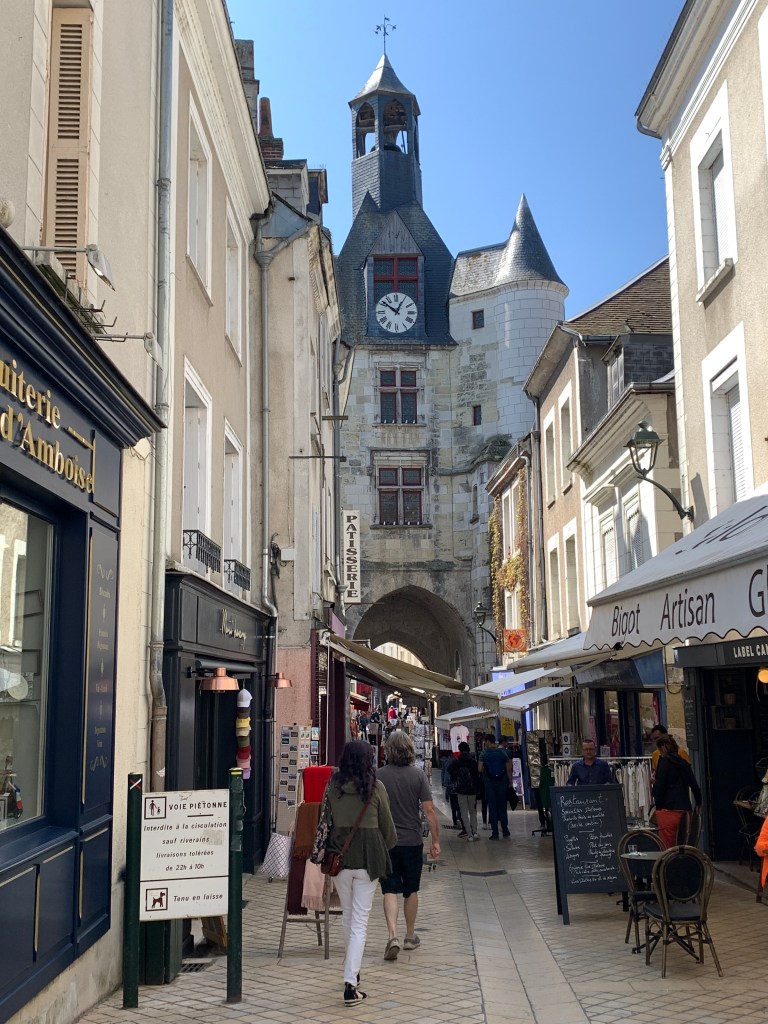
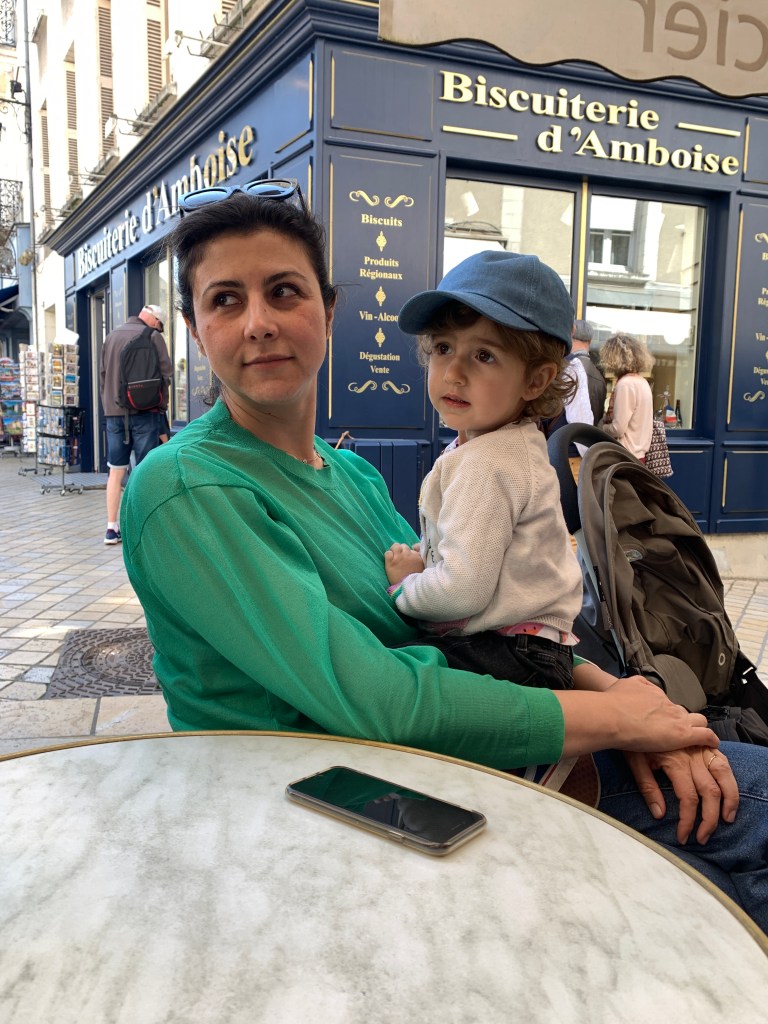
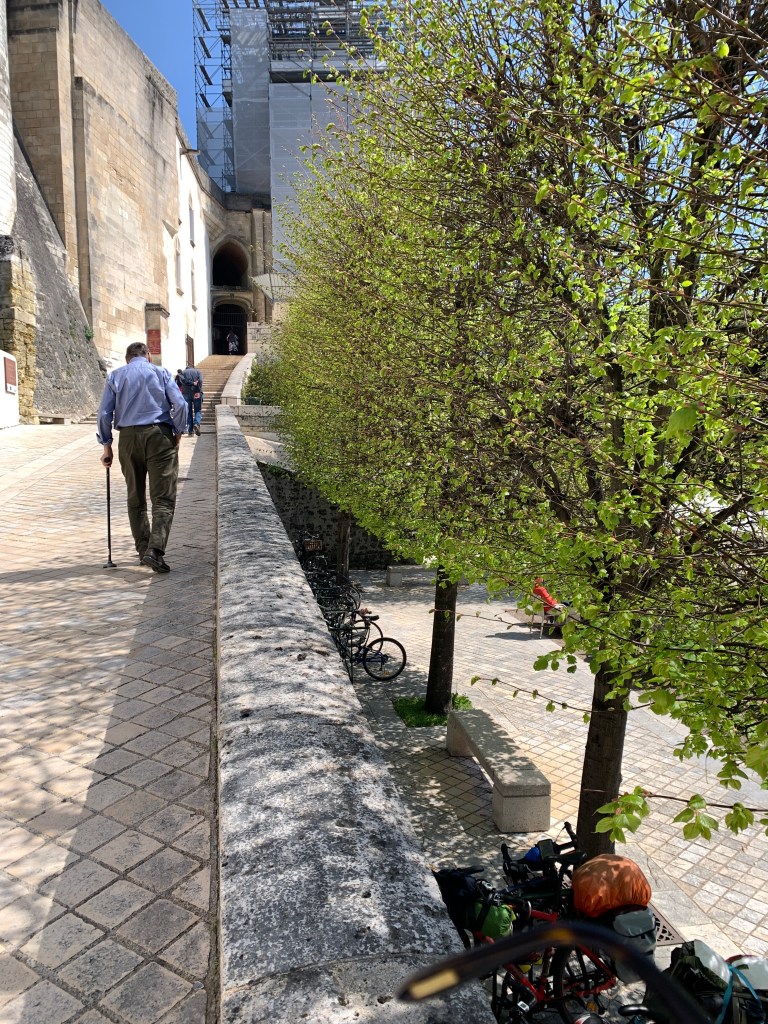
We have been very lucky with the weather since arriving in Tours. Our first castle trip was to Amboise and it felt like summer. We started out in an outdoor café got a bite to eat and then made our way through the old town to the entrance of the Château Royal.
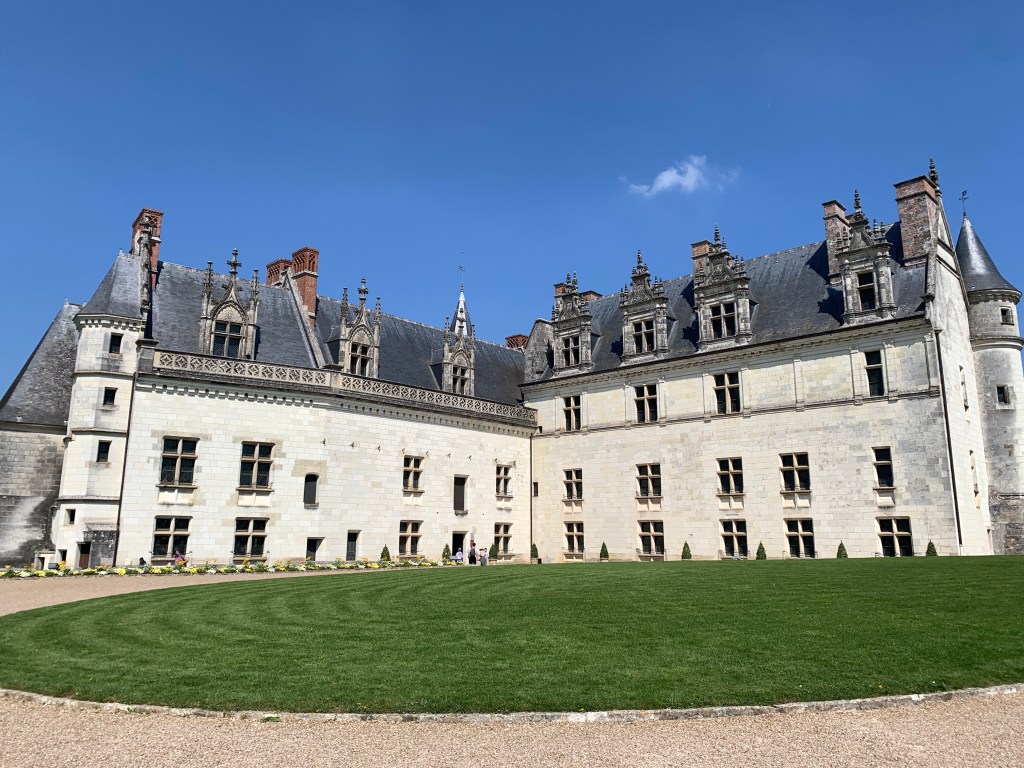
The caste’s foundation was started in the 4th century by the Celts and over the medieval period the rights to the fortress was disputed between the counts of Anjou and Blois. In the 1400s the château was confiscated by the crown and became a place for all the Valois and Bourbon Kings to live, play and raise their families.
The style of the castle was greatly inspired by the artistic vitality of the Italian artists of the period. They were invited to Amboise and together with French tastes the Early French Renaissance was created.
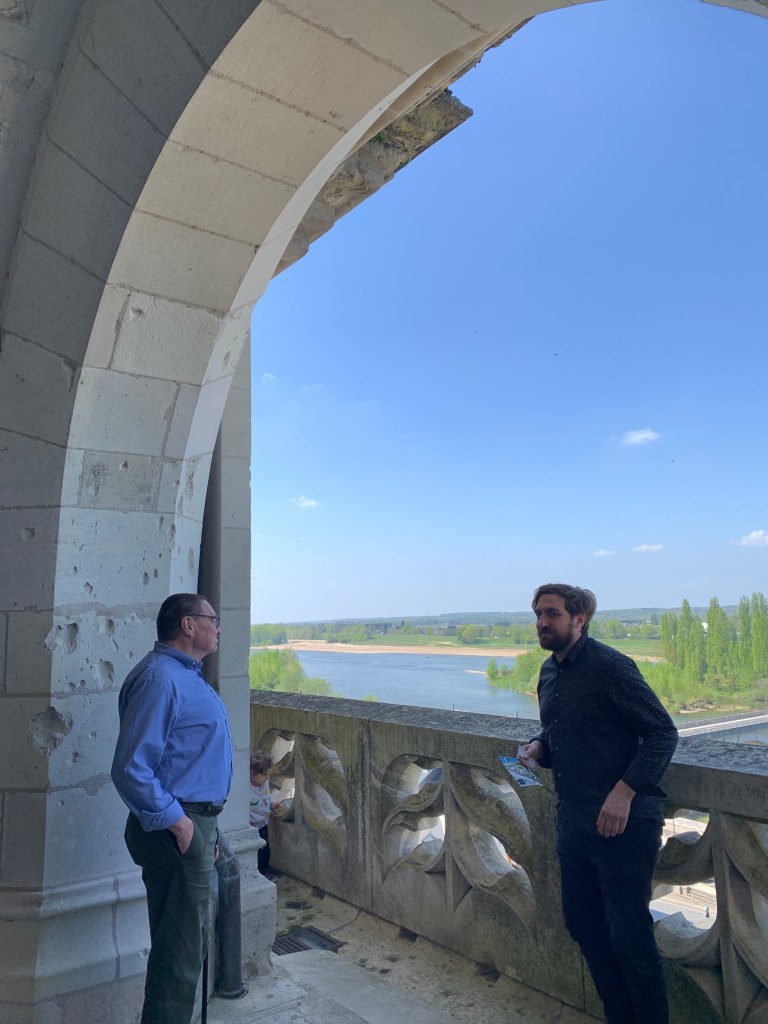
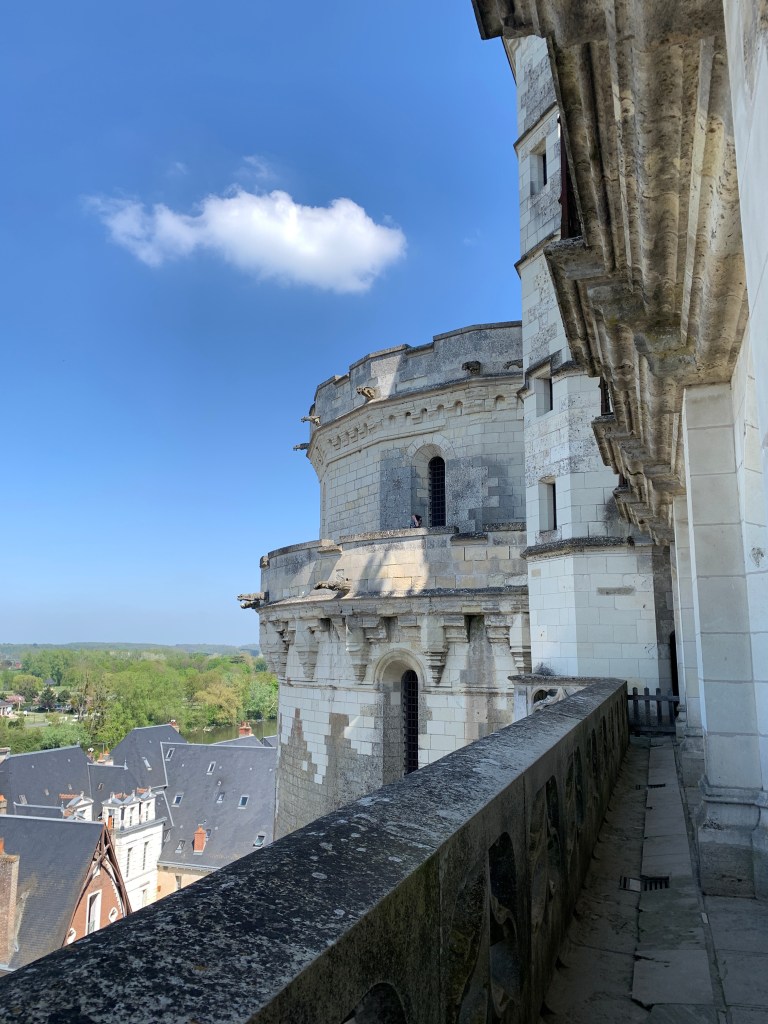
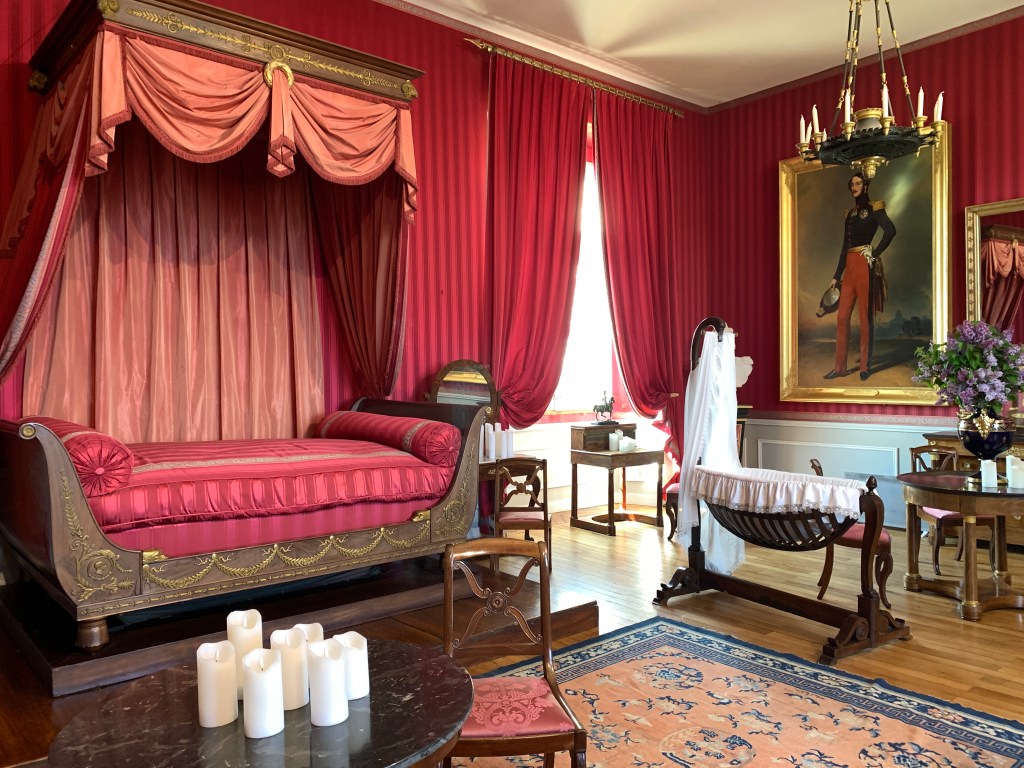
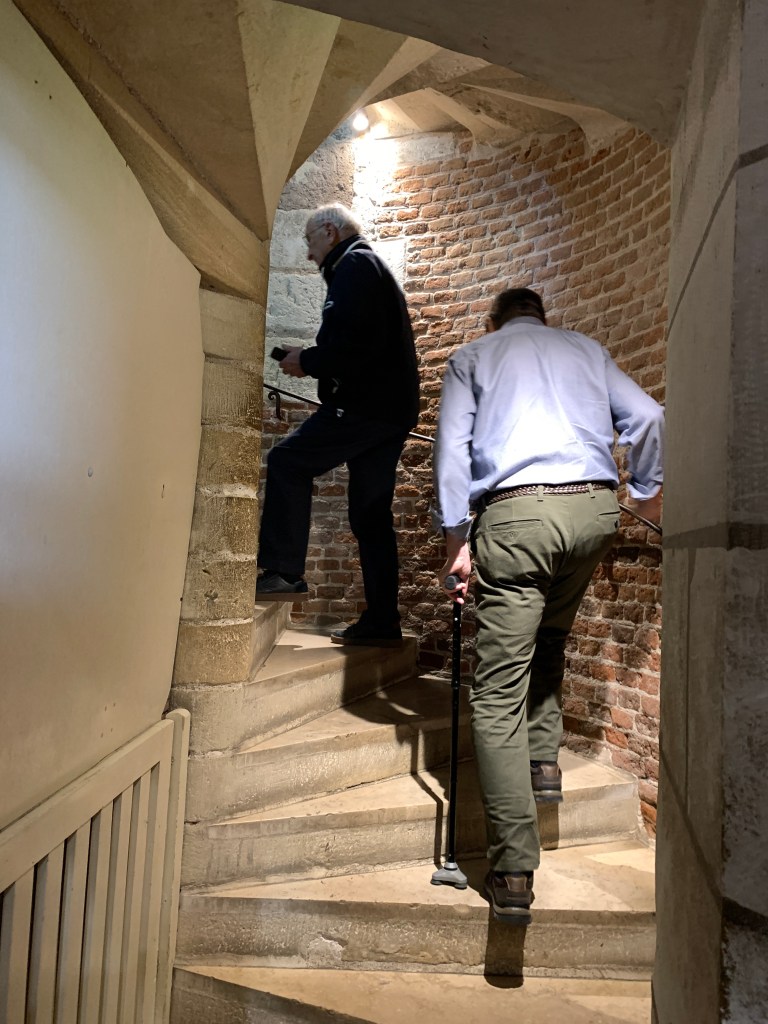
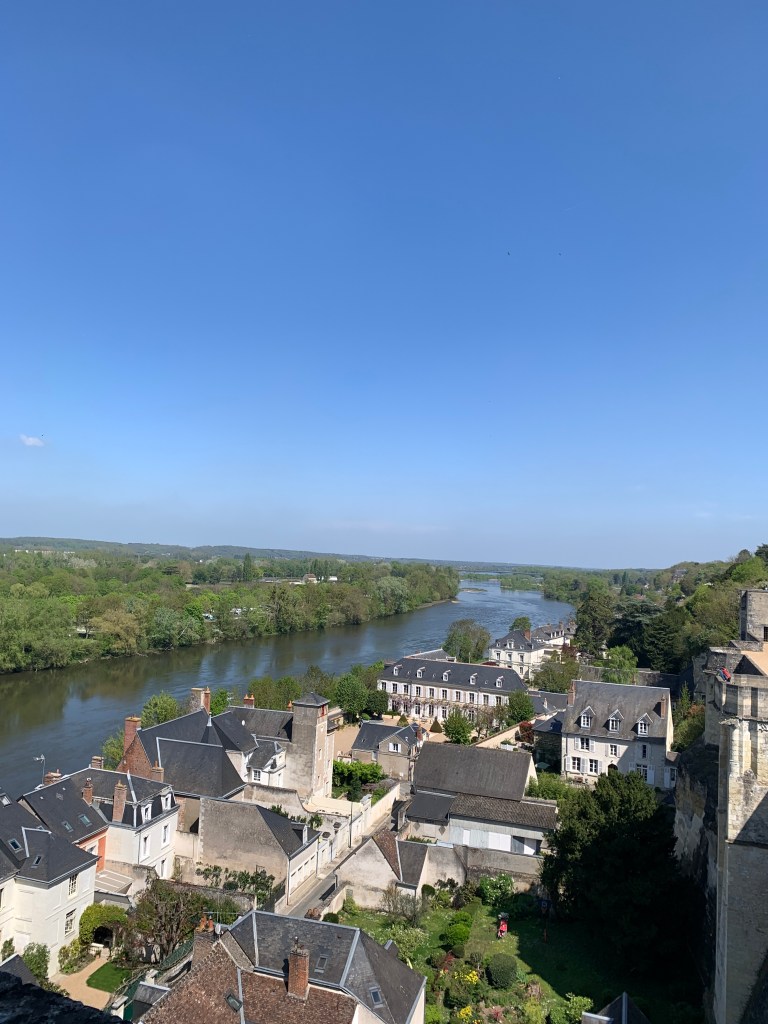
Queen’s bedroom and nurserySitting at the topView of the Loire from the top of the castleMaking our way to the gardens
One of my favourite parts of the Château Royal in Amboise was the garden.
South Etobicoke in Toronto where I live is divided into three areas along the waterfront. The area on the east side is Mimico, New Toronto is in the middle and Long Branch is on the west side. Last week I took a drive over to Long Branch to check out the waterfront.
Long Branch was originally owned by Col. Samuel Smith in the early 1800s. He had a large family and he tried his hand at farming after he left military service. He apparently wasn’t a very good farmer and five of his seven children never married and continued to live in their parents’ home after they died.
In 1861, James and Margaret Eastwood purchased the old house and 500 acres of lakefront property from the Smith Estate. They cleared the timber and farmed the land. In 1883, they sold 64 acres on the eastern edge of their property to a consortium which developed it into an exclusive summer resort area. The land was subdivided into 250 villa lots where the well-off could build summer cottages.(copied from the Etobicoke Historical Society). http://www.etobicokehistorical.com/long-branch.html
Many of these magnificent ‘cottages’ still stand today. It always amuses me to think that people who lived in Toronto travelled 10 to 20 kilometres in the summer to travel to their summer homes.
Most of the buildings on the south campus of Humber College are from the late 18th century when the grounds were the Psychiatric Hospital. Originally built as a branch of the Toronto Asylum for the Insane, the hospital officially opened its doors in 1890 as the Mimico Asylum — the first such institution in Canada to be built on the cottage system. After the hospital closed in 1979 the buildings stood empty and in 1988 it was declared a heritage site.
When Humber signed a 99-year lease for the land and buildings in 1991, it began a complete restoration of the cottage buildings. Today the buildings have been restored to their original beauty and serve as classrooms and studios for the students. In between some of the old building a few new modern structures have been built. It’s a nice contrast between new and old.
While the weather is still somewhat pleasant and my husband is feeling relatively well, we’ve been taking walks together around the neighbourhood and over to the parks. Today we got as far Col. Sam Smith Park and headed up towards Humber College.
I love the grounds and the old buildings of the south campus. These building used to be part of the old psychiatric hospital that closed down in the the late 70s. The buildings were all restored to their former glory but instead of hospital wards they became classrooms and offices for Humber College. Some of you might even recognize one of the buildings that was used in the Police Academy movies before the restoration took place.
Now that the leaves have all fallen I found it interesting to shoot some of these old buildings through the branches for a slightly different perspective.




















 Mama Cormier