Thursday Doors – A Peak into Dundurn’s Questionable Past

…..thanks to Norm for hosting Thursday Doors

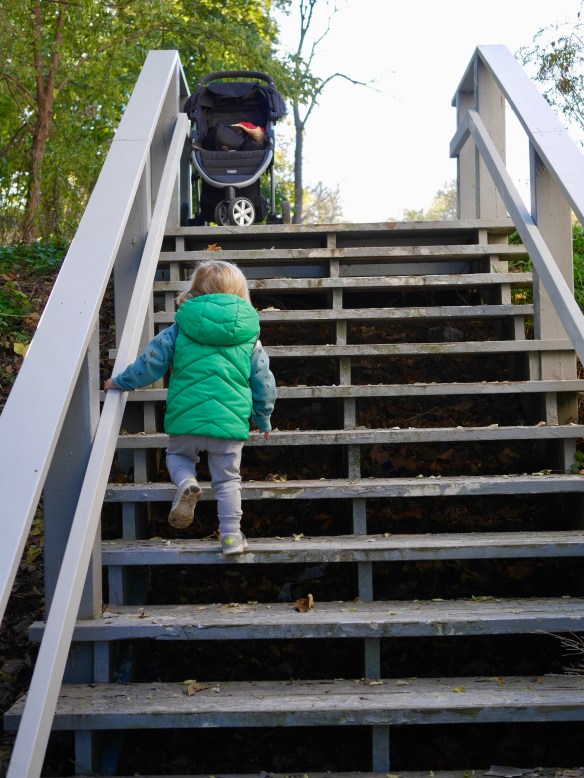
Yesterday my granddaughter and I walked over to the park at Dundurn Castle in Hamilton. She no longer calls it the dinosaur park but now uses its actual name ‘Dundurn Castle’.

IMG_3139

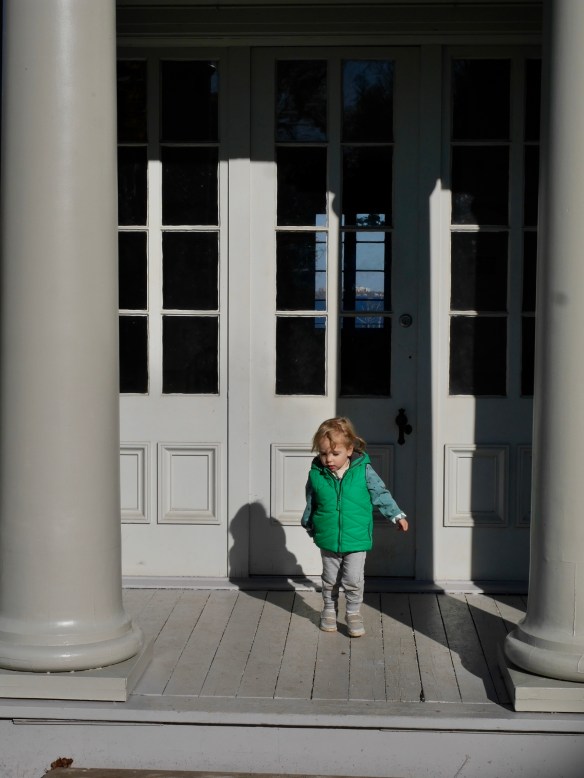
On the grounds there sits a beautiful small white building with large columns at the entrance. I never gave much thought to what the building was originally used for but when I found out what it might have been potentially used for I was quite shocked. It is referred to as the Cockpit Theatre but according to Wikipedia there is no proof that it was ever used for cockfighting. It is also referred to as a folly, which I had to look up.

fol·ly

[ˈfälē]

NOUN
  1. lack of good sense; foolishness:
    “an act of sheer folly”
  2. a costly ornamental building with no practical purpose, especially a tower or mock-Gothic ruin built in a large garden or park.
  3. a theatrical revue, typically with glamorous female performers:
    “the Ziegfeld Follies”

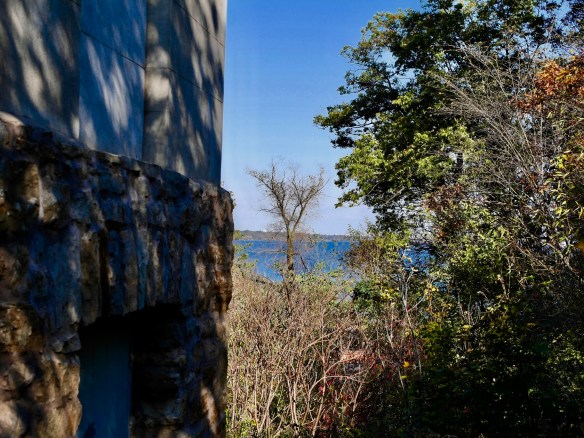
According the Tourism Hamilton, “The Cockpit Theatre is the small Neo-classical building overlooking Burlington Bay on the edge of the escarpment estate. It was built by Sir Allan MacNab as a place to entertain business and political friends in an era two hundred years before action films and reality television.  No archaeological evidence has actually shown that the building was ever used for the activity its name suggests.”

Another source gives this description of its original purpose: One of Dundurn Castle’s favored buildings it is actually a folly as its true purpose will forever remain unknown. Most locals refer to it as housing MacNab’s cockfighting ring as he was an avid participant in this long since banned sport. Local lore has underground tunnels leading from it to the main mansion.

Other uses being designated to it include:

  • A Theatre
  • A boathouse
  • A laundry house
  • An Office
  • A chapel for his wife

 It is confusing to me that all accounts try to deny the use of this beautiful building as a cockfighting pit yet its official name is The Cockpit Theatre and as I peaked inside there were placards describing ‘cockfighting’. In fairness to Dundurn Castle I wasn’t able to read the information through the window so maybe they were debunking the myth. Anyway it makes for an interesting story.

fullsizeoutput_7a4d.jpeg

fullsizeoutput_7a46fullsizeoutput_7a48fullsizeoutput_7a49fullsizeoutput_7a4afullsizeoutput_7a4b


Webster’s Falls

….one of dozens in the Hamilton area

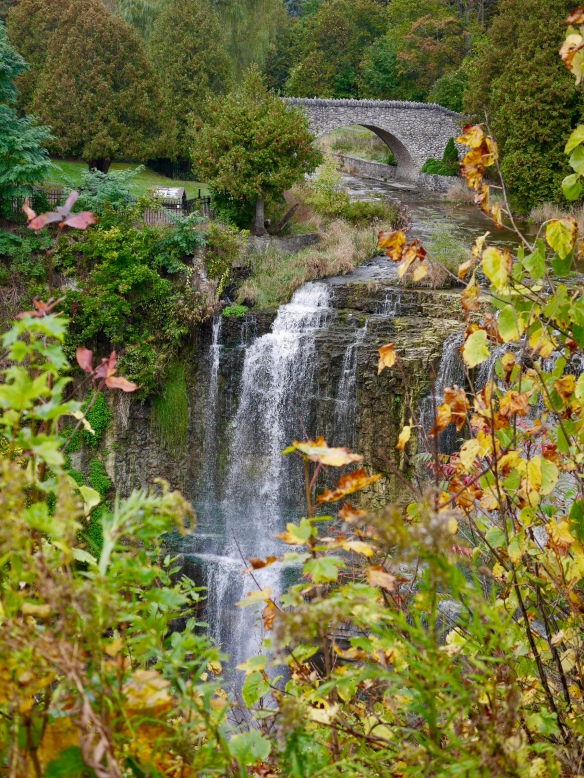
Hamilton is not only the city where my youngest daughter and her family live but it is also considered the Waterfall Capital of the World. Hamilton sits on the Niagara Escarpment and the region surrounding this large urban area has over 100 naturally occurring waterfalls; there are so many waterfalls in fact that some call Hamilton the “City of Waterfalls”.

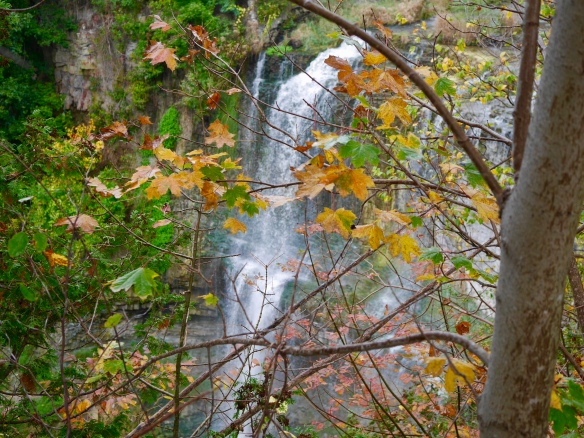
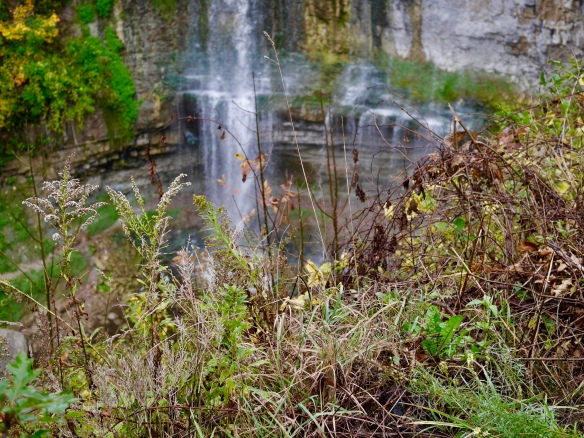
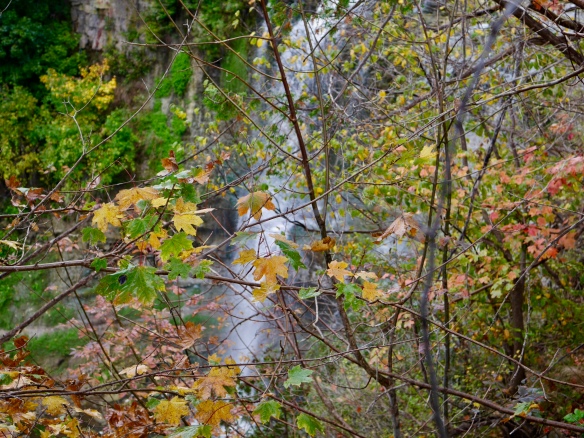
Webster’s Falls is one of the first falls I have visited in the area. It is 30 metres wide and 22 metres high. I took the following history of the falls from http://www.waterfalls.hamilton.ca.

The waterfall and surrounding land was purchased in 1819 by the Webster family. Their family manor still stands on the Webster’s Falls Road and family gravestones have been preserved in a small area near the parking lot. A story of native folklore also surrounds this site. In the area now known as Westover, lived an Attiwendaron chieftan and his princess daughter. Although the princess had fallen in love with a high-ranking Indian from the Seneca Nation, she was promised in marriage to a young chief of the Erie Nation. The cheiftan threatened to imprison the princess unless she agreed to marry the chosen chief from the Erie Nation. The young lovers, realizing the hopelessness of their situation, locked in each other’s arms, jumped over Webster’s Falls to meet their death in the rock pool below. Legend has it that whenever the water level is high and the air is filled with a silvery mist from the full moon, the princess and her lover can be seen to rise to the edge of the cliff, where they again pledge their endless love to one another.

fullsizeoutput_7800fullsizeoutput_7802fullsizeoutput_7803fullsizeoutput_7804fullsizeoutput_7805fullsizeoutput_7806

Seven Day Black and White Photo Challenge – Day 6

I received this challenge from my blogging friend Cee over at  Cee’s Photography  

Rules are

  • Seven days.
  • Seven black and white photos of your life.
  • No people.
  • No explanation.
  • Challenge someone new each day.

Today I challenge anyone who wants to play; feel free to jump in and start your own Seven Day Challenge.

fullsizeoutput_77e7

Cee’s Fun Foto Challenge – Tombstones or Cemeteries

….thanks to Cee for this unusual theme for the week Fun Foto Challenge

I saved this challenge until I came across an interesting cemetery. This didn’t happen until last week when my friend D and I took a tour of some old churches on the west side of Lake Simcoe. Two of the churches had cemeteries attached to the church grounds.

In the last cemetery we found the tombstone for Stephen Leacock, the famous writer and humorist. For more information about Leacock’s life look here.

Rome’s Top 10 – Part 3

….as promised here is my account of Trastevere, the Roman Forum and the National Monument of Victor Emmanuel II.

The Roman Forum

The Roman Forum is a rectangular plaza surrounded by the ruins of several important ancient government buildings at the center of the city of Rome. At the height of the Roman Empire the forum served as the venue for public speeches, criminal trials, and gladiatorial matches and the centre of commercial affairs.

After the fall of the Roman Empire the forum fell into disrepair and in the Middle Ages it was used as a cow pasture. During that time the buildings were plundered for their marble and stone. Excavation of the area began in the 18th and 19th centuries and continues today. It seems as though every time the city undergoes a new construction project it comes across a new archeological find and construction is halted while a new dig takes place. Today the ruins attract 4.5 million tourists a year.

National Monument of Victor Emmanuel II.

This national monument was one of the first impressive buildings that we saw as we were driving to our apartment in the outskirts of Rome. Our taxi driver described it as a war memorial but it was much more than that.  Il Vittoriano was built in 1925 to honor Italy’s first king, who is credited with creating a single Italian kingdom in 1861. It has come under much criticism for being too showy with its thick, gleaming white marble that stands 230 feet (70 meters) tall and is visible from several points across the city. Again we only saw this building from the outside but its immense size and opulent sculptures are a feast for the eyes.

The Trastevere

The Trastevere is a neighbourhood that literally translates to “across the Tiber,” and was once considered the outskirts of Rome. In the three days that we were in Rome we spent two evenings in this Bohemian gem. On our first night we enjoyed authentic Italian pizza in a popular, crowded restaurant close to the Piazza Santa Maria. The cobblestone streets are narrow and windy and one can easily get lost in this quaint medieval neighbourhood. I was glad that my girls had their GPS devises with them. On our way back to the apartment that evening we happened to come across a parade of local residents celebrating one of their Catholic saints.

On our last day in Rome, my son and I ended our whirlwind tour of Vatican city back in Trastevere. After walking over 23 000 steps I needed to take a break and we stopped at a small outdoor bistro where I enjoyed a glass of Proseco while my son walked to the tram to pick up his sister, her daughter and his father. There was no way that they would have found the location on their own. B’s wife joined us as well and we had a lovely final evening together on our last day in Italy.

There are many other wonderful sites to see in Rome. I have mentioned only a handful of interesting places to visit that I experienced first hand. Many of these places I would go back to and spend more time exploring the interiors. Do you have any favourite places to visit in Rome? I’d love to hear about them for my next adventure to to this great historic city.

Ciao!

Culture Days – Sept. 30, Oct. 1-2

…..last Saturday I attended a ‘culture days’ event at Humber College

Culture Days was founded in 2009 and raises the awareness and  participation of Canadians in the arts and cultural life of their communities. Hundreds of thousands of artists, cultural workers, organizations and groups, volunteers and supporters host free  public activities that take place in hundreds of cities and towns throughout the country over the last weekend of September each year.

Culture Days offers a wonderful opportunity for Canadians across the country to explore and participate in the cultural communities that exist in their neighbourhoods that they may have not even be aware of before.

The event that I was most excited about was the Tunnel Tour. Humber College by the Lakeshore took over the old psychiatric hospital which closed in 1979 and restored the original facades of all the the cottages and main buildings. The buildings were connected by an underground tunnel that were used to transport food and laundry to the patients. The tunnel itself was dug by the patients and a cross section cut out of the wall shows the primitive technique used to cement together the pieces of slate that were probably found on the property.

The tunnel is still used today to house gas, water and sewer pipes and to transport supplies from one cottage to another. Part of the tour included talking about the history of the psychiatric hospital and how the different cottages were used. Cottage D housed the detox patients and K cottage was home for the children who lived at the hospital. That was the saddest part of the tour. Apparently when children suffered from epilepsy and/or ADHA they were admitted to the hospital where they spent the rest of their lives. Nurses used to walk up and down Lakeshore Blvd. looking for children that had been deserted by their parents because they thought their seizures were signs of being possessed.

I also learned that a ghost lives in cottage G. She’s been seen by the care taking staff and security. Apparently she’s friendly and is a former nurse who worked at the hospital. Cottage G is the last cottage to be renovated. Our guide kindly took us inside. It certainly didn’t look haunted.

After the tour I took a walk over to the Assembly Hall and watched the dancers in the Pow Wow.

Later in the afternoon I took part in an art workshop. We were a very small group. First we took a walk through the grounds towards the lake and picked up natural materials off the ground. When we returned to the classroom we were presented with old nature books that were being discarded and numerous art supplies to create our nature inspired piece of art. It was very relaxing and I walked away with two samples that I can use in future art classes at school.


Travel Theme: Fabric

…..Aisla from Where’s My Backpack has challenged us to post photos of fabric

I’ve always loved fabrics. My parents opened their own fabric/wool store when I was 16 years old. They decided on this business partly due to the fact that as a family we sewed a lot of our own clothes and I already knew that I wanted to be a home economics/family studies teacher.

Recently my husband and I went to an exhibit at the ROM where they featured the traditional fabrics and clothes of Mexico.

A Working Lighthouse Among the Ruins

….Christian Island still has a working lighthouse

At least once a summer I like to drive to the south west shore of Christian Island where the light house is situated. It is the oldest lighthouse in Georgian Bay, established in 1859. The first light house keeper was William Hoar and his son took over when he passed away. The families of the keepers lived on the island in a small house that was built next to the light house.

Today the light house is automated and the house next to it is in ruins. Over the years the light house has seen many changes. During World War II the lantern room was removed and the scrap metal was used to support the war effort. In 1965 the coast guard placed an automated beacon on top of the tower and in the early 2000s the lantern room was returned to give the tower its original look.