….had to go back into the vault to find these photos
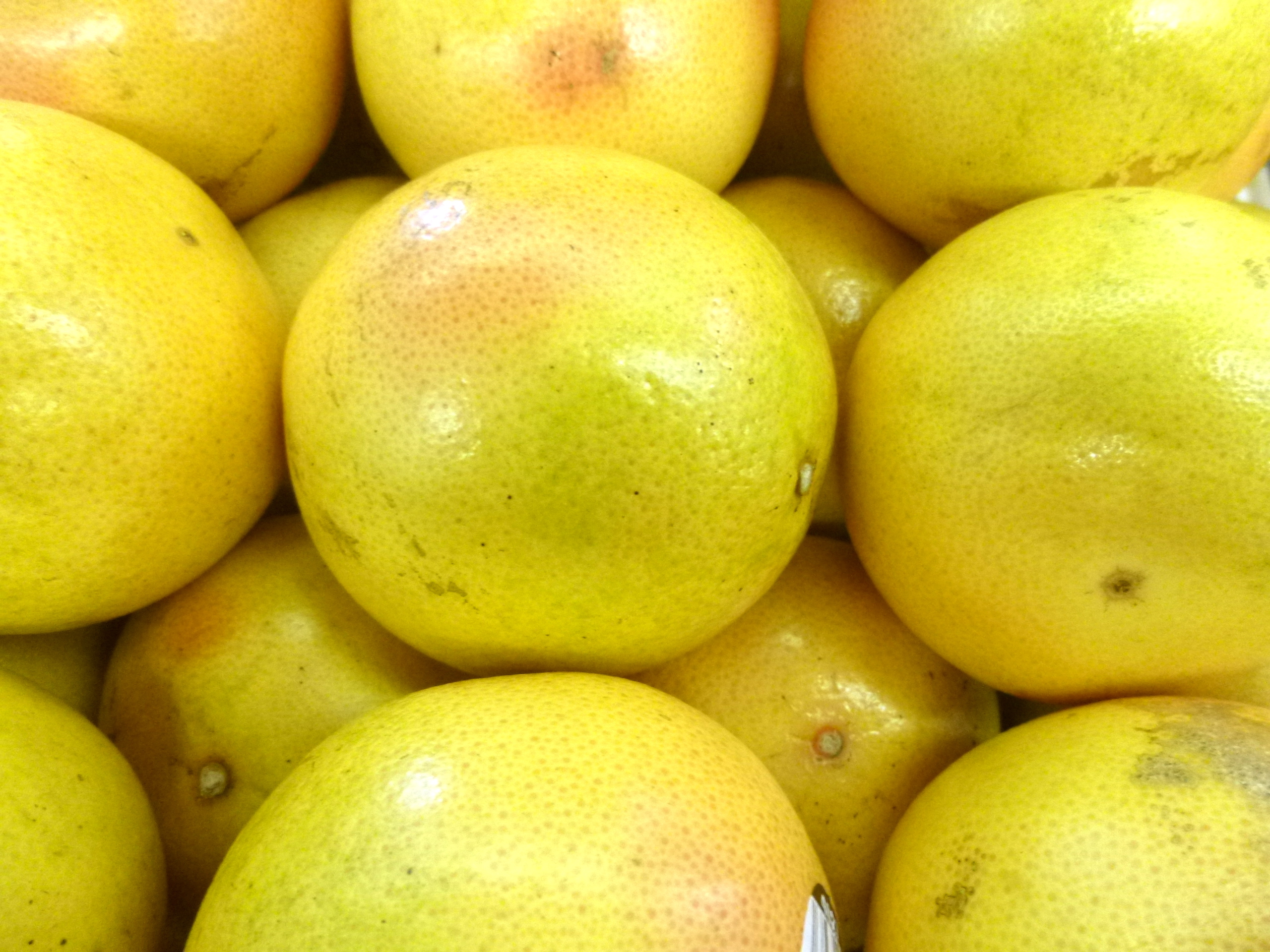
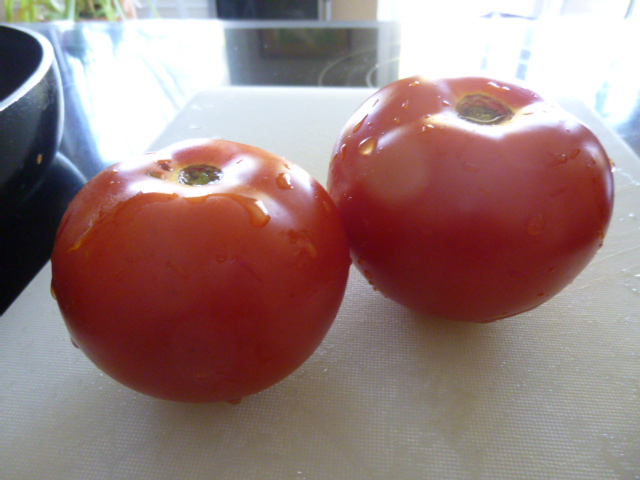
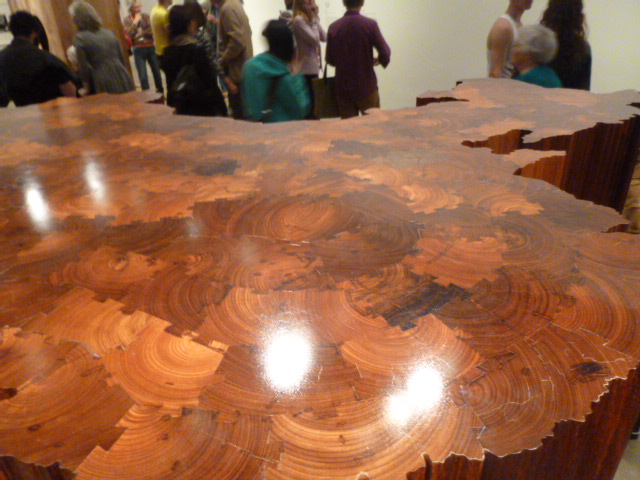
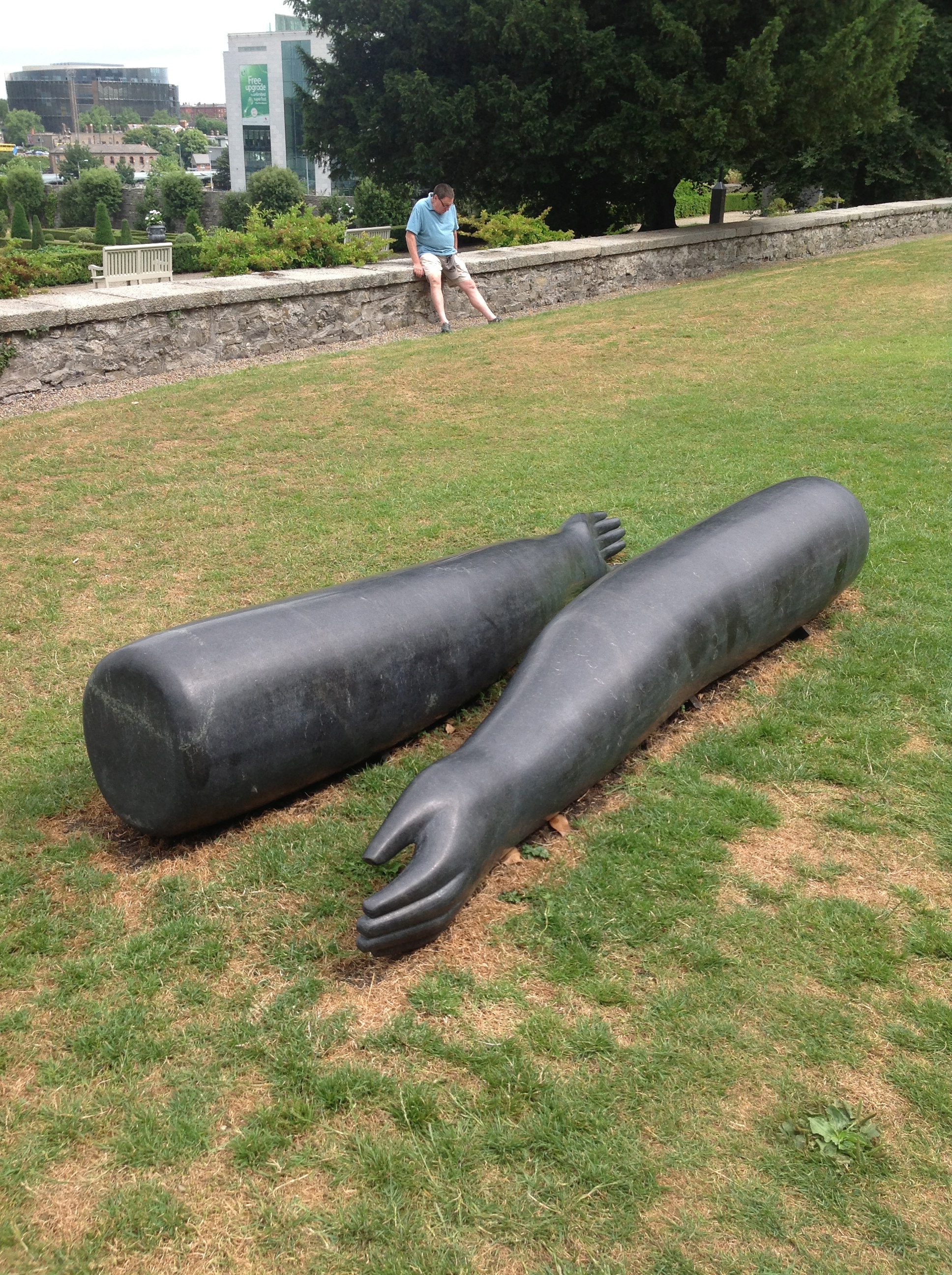


For more fun photos of ‘smooth’ objects go to Cee’s Fun Foto Challenge.
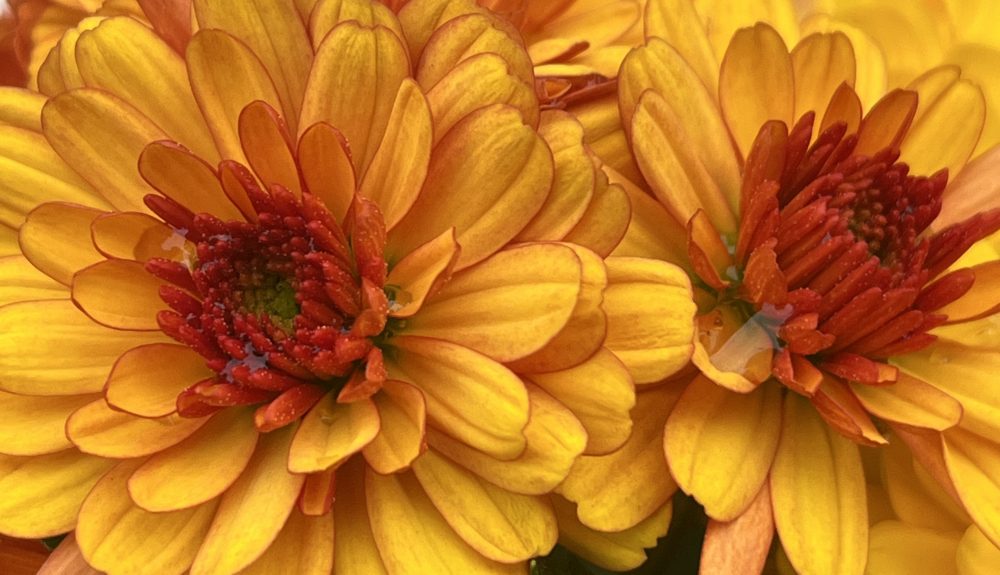
….had to go back into the vault to find these photos
For more fun photos of ‘smooth’ objects go to Cee’s Fun Foto Challenge.
…..one week to go
If you live in Toronto or are visiting this is your last chance to see the Ai Weiwei show. Last week I posted some of the installation pieces at the show. Featuring photographs, sculpture, installation art and audio and video pieces, Ai Weiwei: According to What?examines how the artist spotlights the complexities of a changing world and probes such issues as freedom of expression, individual and human rights, the power of digital communication and the range of creative practice that characterizes contemporary art today both in China and globally.(as cited in the AGO newsletter).
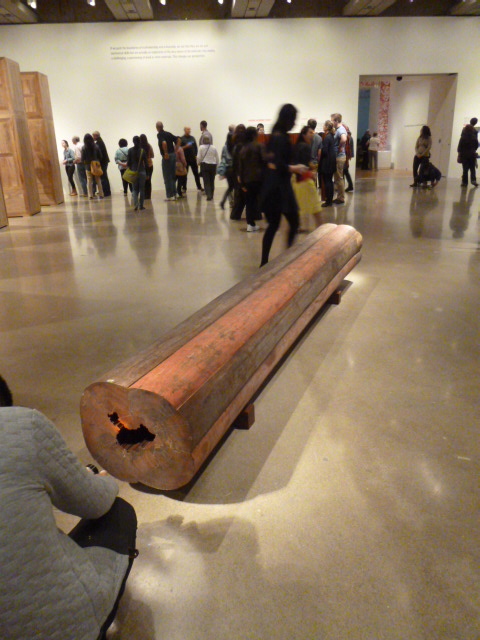
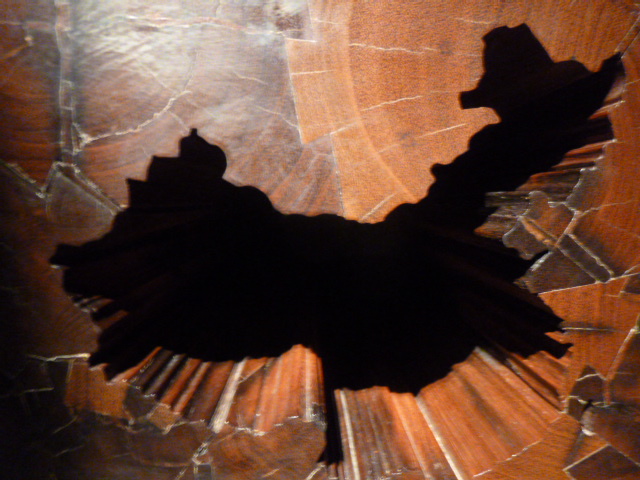
China Log 2005
This sculpture is made from 8 pillars salvaged from Qing Dynasty temples that were carved at the centre and when joined together they formed an opening through the entire length of the ‘log’ in the shape of China. The China log implies that present day China is made up of a variety of cultural and historical elements.
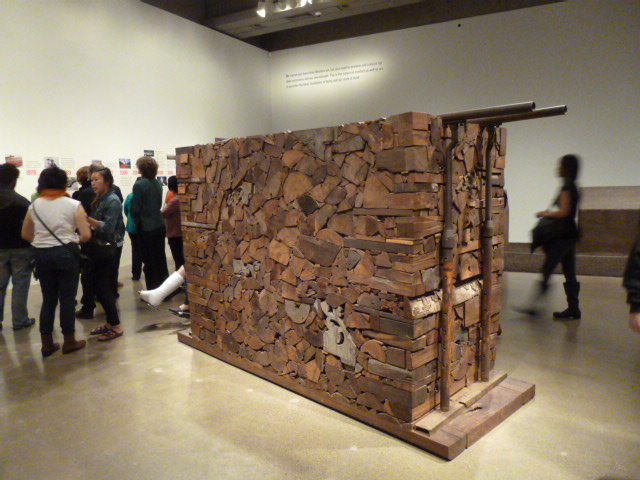
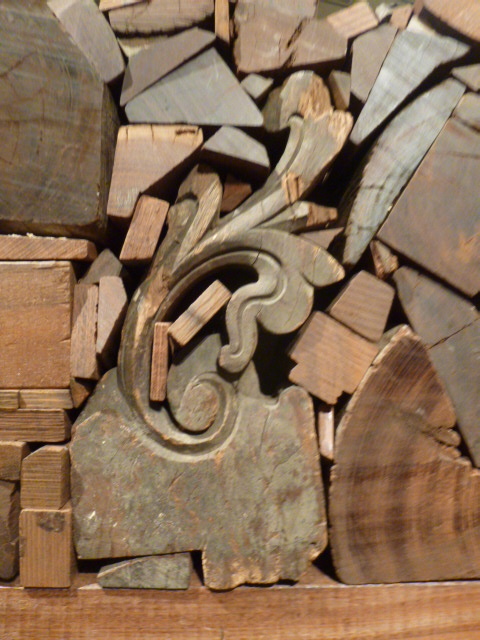

Kippe, 2006
This sculpture is made with parallel bars as the frame for a three dimensional puzzle of tightly fitted pieces of wood salvaged from Qing Dynasty temples. Ai Weiwei’s memory of childhood school yards that were equipped with a set of parallel bars and a basketball hoop were part of the inspiration for this sculpture. The other part came from the beautifully stacked firewood outside his family home that was openly admired by the people in his neighbourhood.


Wenchuan Steel Reebar, 2008-2012
Ai Weiwei uses rebar recovered from the rubble of collapsed schoolhouses following the 2008 Sichuan earthquake. It is a large physical work, designed to remind people of the individuals in danger of being forgotten.

Forever, 2003
These 42 Forever bicycles were dismantled and reassembled to form a circular sculpture. The Forever Co. was established in 1940 and became the largest manufacturer of bicycles in China. In recent years with the onset of modernization the bike is disappearing from city streets but many Chinese still cherish memories of their bicycles that will last ‘forever’ in this work.
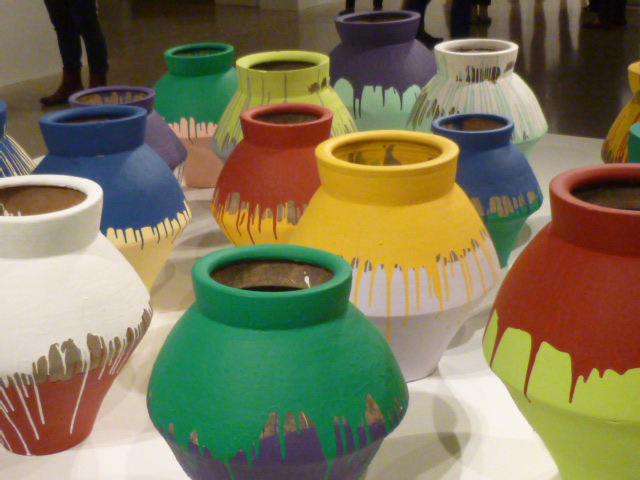
Coloured Vases, 2007 – 2010
This series consists of Han Dynasty vases dipped in industrial paints covering the patterned surfaces of the jars with bright modern colours while maintaining the original forms.
I love this man’s work and I discovered today that we share the same birthday. The show will be leaving Toronto this coming weekend and will move to Miami, Florida to the Perez Art Museum (November 28, 2013 – March 18, 2014) and then moves to Brooklyn, New York to the Brooklyn Museum (April 18 – August 10, 2014).
Cheers!
….pronounce ‘I way way’
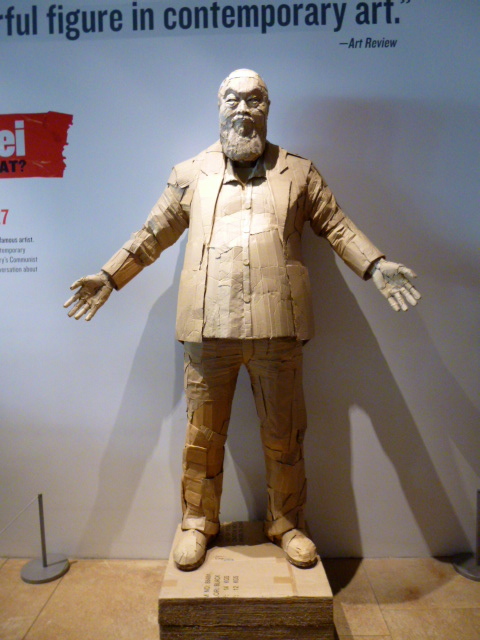
Today my friend L, her sister and father and I drove into the city to the Art Gallery of Ontario to see the David Bowie Show and the Ai Weiwei Show. A lot to take in, in the short time we had. Considering it is the Thanksgiving weekend the gallery wasn’t too busy when we arrived at 1:30 but later in the afternoon the line-ups were quite long.
I’m going to share a few of the pieces that I saw at the Ai Weiwei show. This incredible contemporary Chinese artist produces photographs and installation art pieces that raise crucial questions about the right to express and conduct oneself freely and that feature repurposed furniture and artefacts.
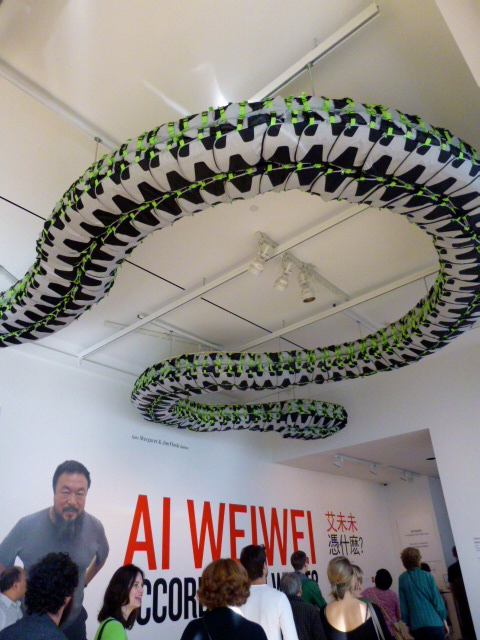
One of the first pieces that you can’t help but notice is the snake like sculpture that hangs above your head as you enter the exhibition. It is made from 800 backpacks, commonly used by students in China, to represent the souls of the many children who died in 2008 during the Sichuan earthquake.
As you pass the through the hallway of floor to ceiling photographs and enter the main hall you greeted by a sculpture called “Grapes“. It consists of 40 wooden stools from the Qing Dynasty (1644-1911) that have been reassembled in a way to transform its meaning and obscure its function. There are no nails in this piece and like the individual stools it is held together with traditional joinery techniques. The whole piece is supported by the legs of one stool.


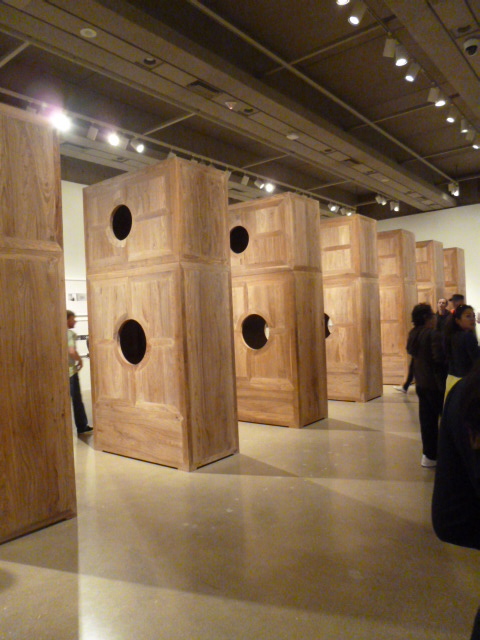
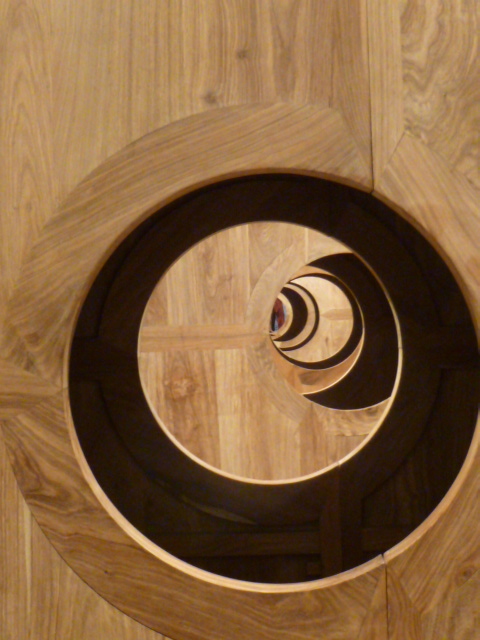
In the same room, a series of seven chests made from huali wood are lined up across the far side of the room. Each chest has four circular openings that when aligned created the effect of showing every phase of the moon to visitors who walk through the installation. The challenge here was trying to get a shot without people passing through. The piece is called Moon Chest.
I will feature a few more pieces in future posts. In the meantime if you’re in Toronto and you haven’t seen this show, I highly recommend it. Hurry though, it closes October 27th.
 Mama Cormier