Geometric Fish

…..it’s easy to draw fish using geometric shapes like rectangles, squares and triangles

For a recent kindergarten art class I read a counting book that was illustrated with funny little fish that came in all shapes and sizes. The illustrator created simple fish shapes with ovals, triangles and square shapes. I demonstrated how to draw a fish using a combination of these shapes. A square, turned to look like a kite, for the body, triangles for the fins and tail and circles for the eyes.

Each student was give a sheet of watercolour paper and a variety of crayon colours and they were instructed to draw at least three fish and some seaweed. I also taught them the trick of making circles with white crayons that would appear magically when they added their watercolour paint.

On my second visit to the class I taught them how to water down the paint and do a wash across their picture. We also talked about using colours that would blend nicely if they wanted to use more than one colour for their background. Again they did a wonderful job. I’m always amazed at how uninhibited young children can be with a little instruction and encouragement from their instructor and peers.

In this class we learned about contour drawings using simple shapes, crayon resist using watercolours, blending colours and using space effectively.

IMG_1553IMG_1558

This slideshow requires JavaScript.

More Paul Klee Art

…. all from my grade 1s

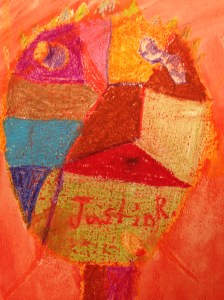
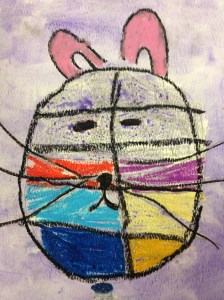
I’ve really enjoyed teaching this unit on Paul Klee. The grade 1s and 2s really enjoyed the process and I loved their finished pieces. The grids took a lot of concentration and you can tell which students took their time. Some started out with good intentions but after awhile they changed course just so that they could be finished with it.

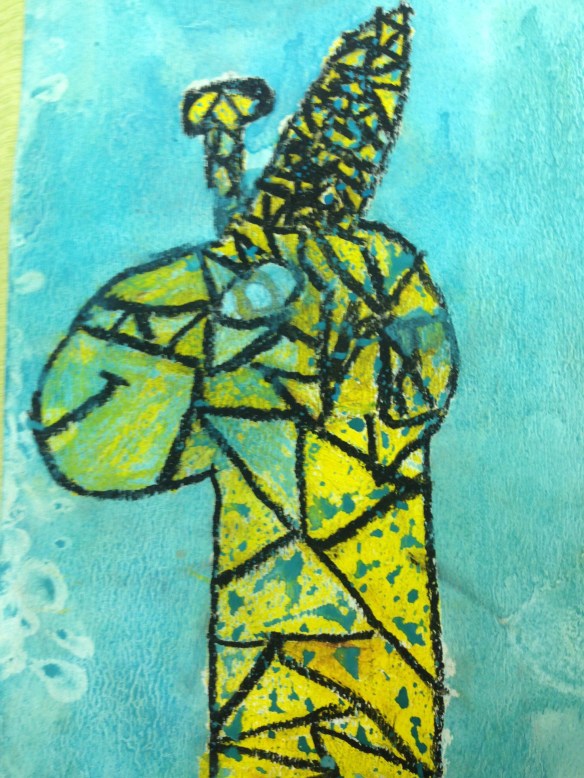
Here are some more portraits in the Paul Klee style. I love the giraffe.FullSizeRender-18
FullSizeRender-17FullSizeRender-16FullSizeRender-15

It was this class that put their grid art into frames for Father’s Day. I wonder how they liked their gifts.


Starry Nights in Oil Pastel and Watercolour

….children in grades one, two and three create their own version of Van Gogh’s Starry, Starry Night

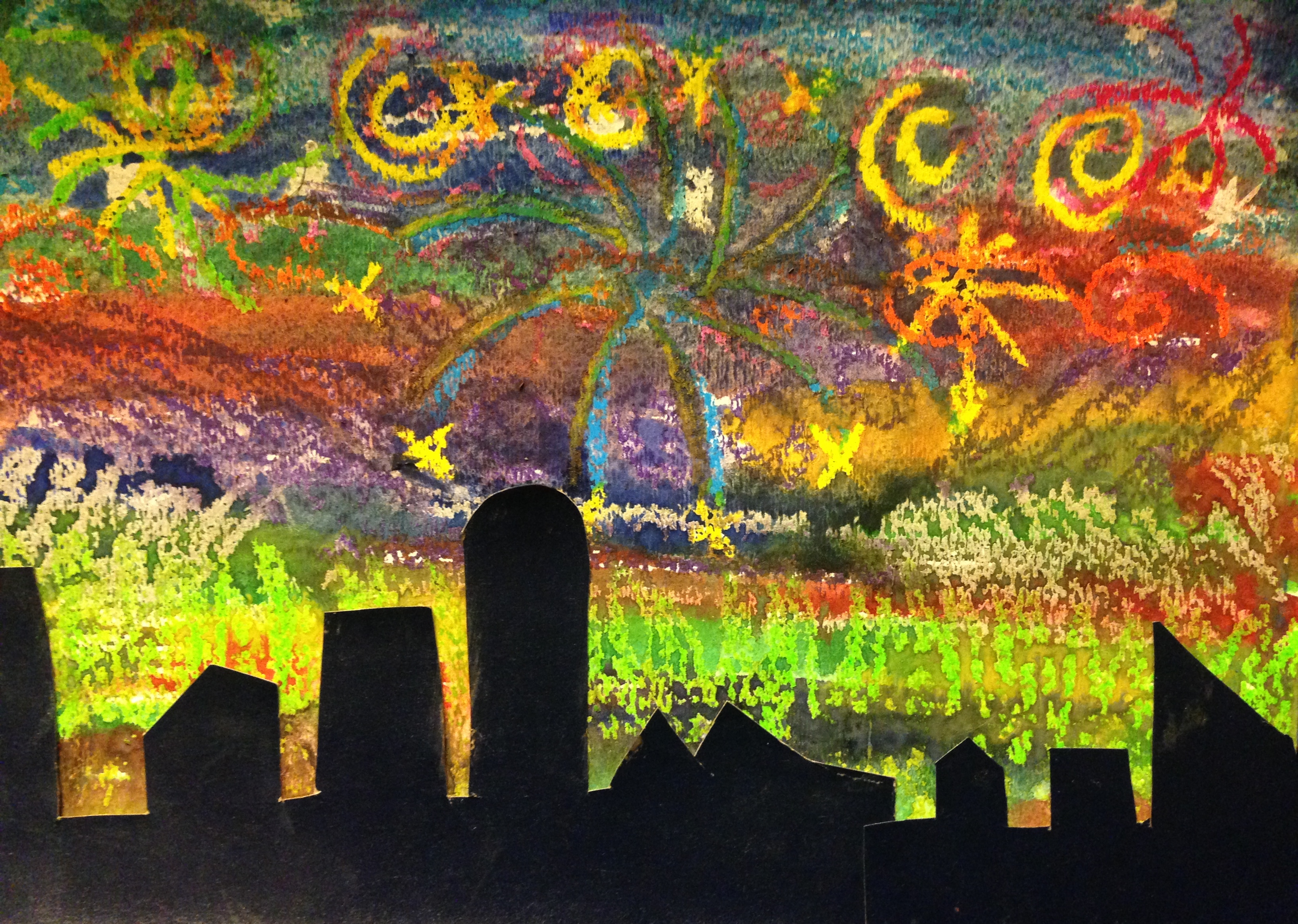
Once again I was inspired by Carla Sonheim’s Free Kids Online Art Classes. In week two Diane Culhane introduced the kids to a crayon resist night sky.

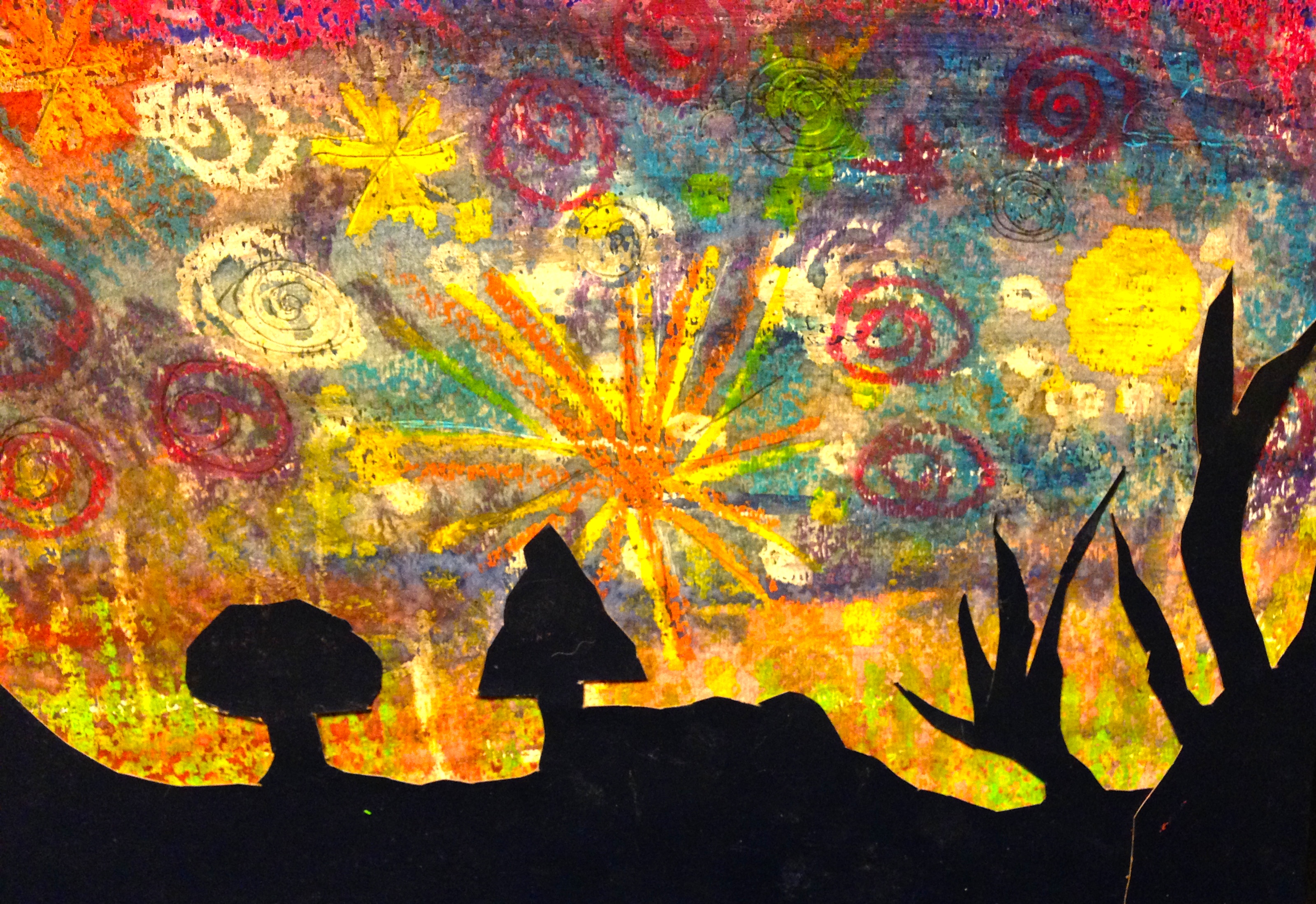
The children loved how the watercolour brought up the crayon designs, especially the white marks. They also loved sprinkling salt over their creations. The concept of cutting out a black silhouette of a city or country skyline was a bit more challenging, especially for the grade ones. Here’s a collection of paintings created by my grade two class.

Starry Nights

….another great art lesson for kids 

Thanks to Carla Sonheim and Diane Culhane from Kids Art Week for this great lesson called Crayon Resist Night Sky.

This would be a great introduction to Vincent Van Gogh and his famous painting Starry Night. I used oil pastels but wax crayons would also work for this project. Students should be encouraged to use lighter colours from the crayon box, especially white. They make the most impact after the water colour is washed over them.

This could also be a lesson on texture so colouring in various directions and pressing quite hard are essential. Swirls and stars will add visual interest and are details seen in Van Gogh’s painting. Be brave and experiment with lots of different colours. Don’t limit yourself to colours that you think are sky colours. Reds, pinks and yellows and even greens make for very interesting night skies. Think of the Northern Lights and have fun.

Once the paper is filled with crayon or oil pastels move on to the water colours. Make them quite watery and start with the darker colours at the top of the page. Again use a variety of colours but avoid black. While the paint is wet you can also add salt to give your painting even more texture.

Using black or a very dark paper cut out silhouette shapes to add to the bottom of your painting. This can be anything you like; forests, hills, mountains, houses, fences and city skylines. When the paint is dry glue the shapes to the bottom of the paper. There you have it, your very own Starry Night painting.

IMG_5646 IMG_5647

A Visiti to the Aquarium Inspires This Art Class

….a watercolour wash, crayon resist, and playing with salt

The kindergarten classes made a trip to the new Ripley’s Aquarium here in Toronto. They researched marine life before going on the trip and I brought library books to the class to use as a reference for their fish drawings.

We started with a crayon line drawing of the fish and surrounding sea plants. I showed the class how to make a wash for the background and while the paint was still wet we sprinkled it with salt to give the water an interesting texture. We also used white crayon to create bubbles in the water and some of the children wrote their names with the this crayon. The last step was to add colour to the fish themselves and the plants. I think they did a wonderful job.

Day 11

…..here are 3 pieces of art that I finished today

Doing art puts in me in a zen state of mind. I’m totally into what I’m doing and I lose all sense of time. I like to create examples of art that I can share with my students or leave for supply teachers to use when they have to cover one of my art classes. There have been times when I’ve gone to school despite being sick because the art project we were working on was too complicated or too messy for an occasional teacher to have to deal with.

Lately I’ve across some interesting, fun and very doable projects that I can leave for a supply teacher. Here are the samples I’ve been working on. The first one I’m actually doing with some of my classes right now. It’s a still life that the students outline in crayon and then fill in with watercolour. The wax crayon creates a resist which prevents the paints from running into one another. The idea came from Be Creative Mary.

P1000779The next two projects are perfectly suited for a supply teacher. Both ideas came from Artisan des Arts

P1000777 P1000778


If you need instructions for any of these projects check out the blogs where I got therm from. Cheers to creating art!