Stained Glass Trees Made With Pastels

….a lesson on blending analogous colours and warm and cool colours

Using chalk pastels and in some cases oil pastels, my grade 3 students designed a stained glass tree of their choice. They were asked to draw their lines to the edge of the paper and use thick black marker lines to represent the lead used in real stained glass art.

If they drew an evergreen tree they had to make sure that the negative space contrasted the actual tree and they were instructed to use the opposite colour choices for the background. In other words if they used warm colours for their tree than the  background would be in cool colours and vice versa. If their tree was a deciduous tree than the spaces between the branches and the negative space were the only areas that were coloured with bright analogous colours that blended nicely together.

For the most part my students understood the concept. Hope you enjoy the slide show of their work.

This slideshow requires JavaScript.

Warm and Cool Picasso Dogs

….this will be the last group of Picasso Dogs that I post

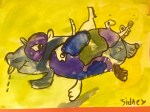
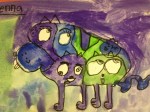
Carla Sonheim has inspired me to teach my students about Picasso. Each grade level was  approached slightly differently to meet the curriculum expectations for that grade. This gallery of Picasso Dogs was done by my grade three class and the emphasis was on cool and warm colours.

Grade Threes Have Fun With Colour and Line

…..in this lesson I introduced a variety of lines and the difference between warm and cool colours

To start the lesson the students were instructed to draw a straight line, a thin line, a thick line, a zigzag line, a broken line and a loopy line. They were encouraged to draw the lines in different directions (horizontal, vertical and diagonal) and to extend the lines from one side of the paper to the other.

Then they had to choose two warm colours and one cool colour or two cool colours and one warm colour. Before they started to colour I suggested that they add more lines inside some of the shapes that they had created so that they had smaller blocks of any one colour and they could add some additional marks for added visual texture and variety.

This is a great lesson to leave with a supply teacher.